How a young Lahore researcher cleared ten years of caffeine in 35 minutes
Ms. Anam is a 26-year-old PhD candidate. She drinks four or five coffees a day at her lab bench and two or three cups of chai through the deadlines. She had been watching the staining slowly increase for five years and had recently started seeing pinpoint bleeding when she flossed. She did not come in because she was scared. She came in because she did not want to wait until it was a real problem. This is the full story of that visit — what we found, what we did, and the small habits we asked her to take home.
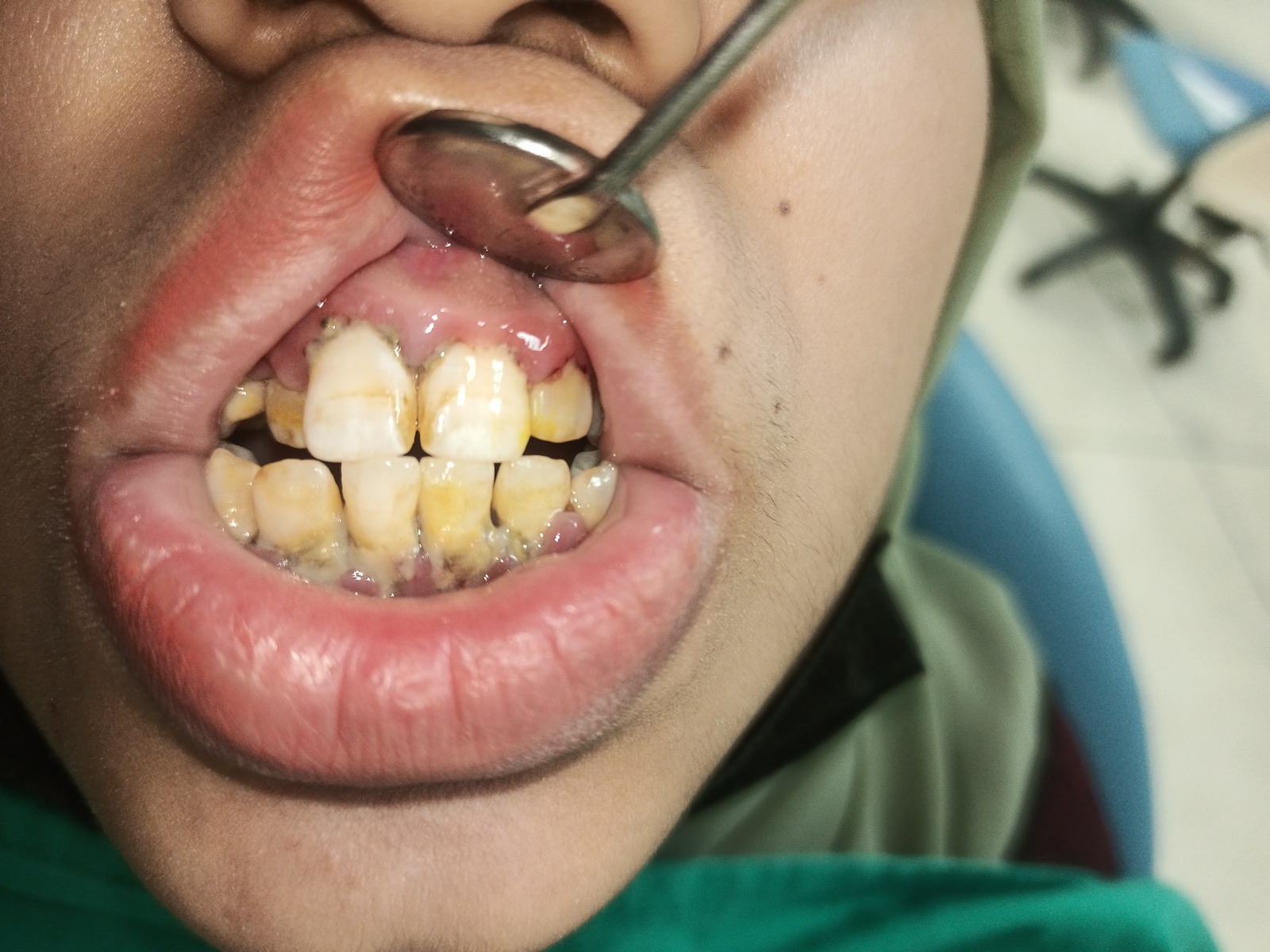 Before
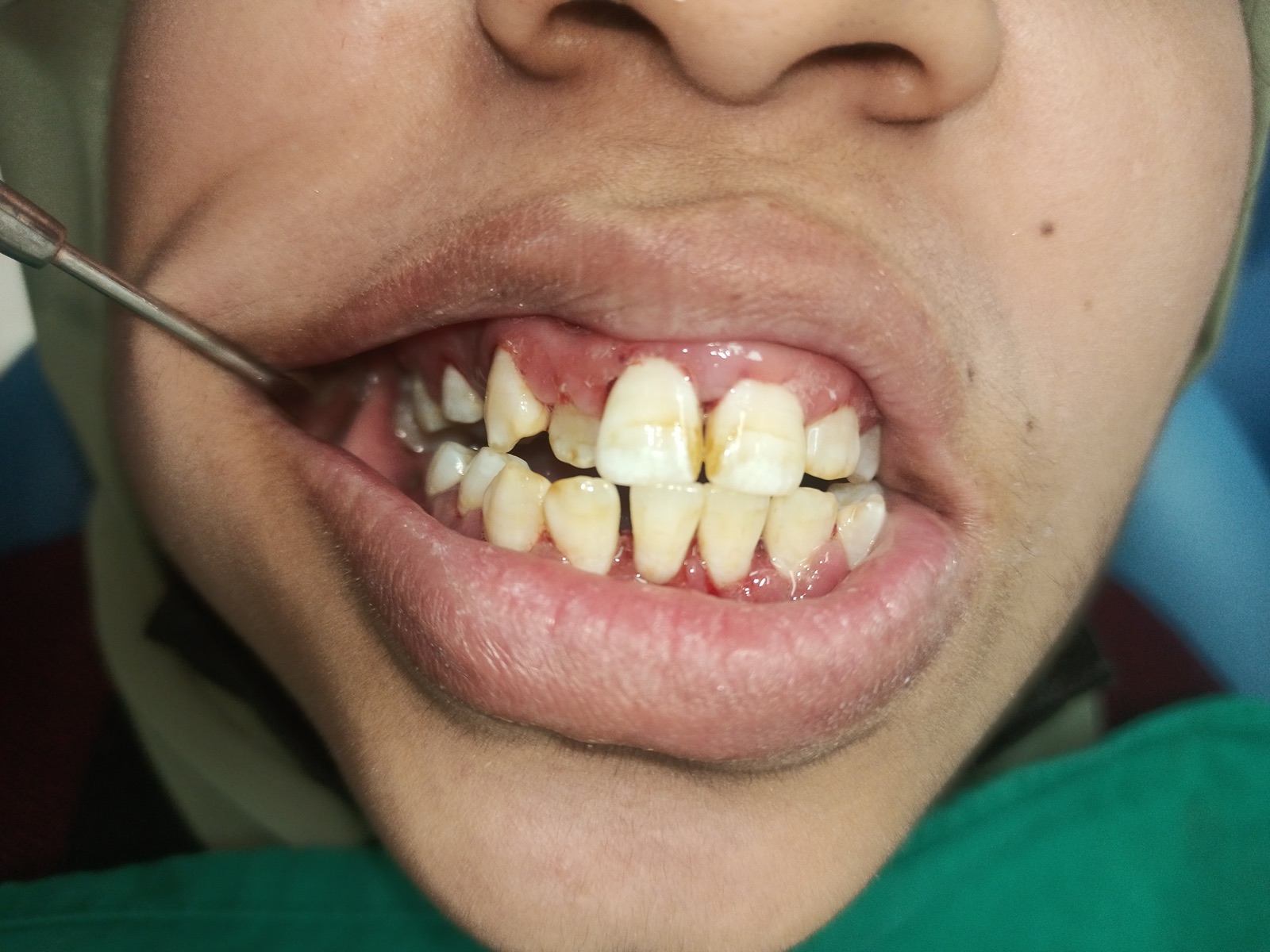 After
AfterShe was doing things right at home.
Most patients we see at this stage of staining are not people with poor habits. They are young professionals with consistent home care whose diet has slowly outpaced what a brush can lift on its own. Ms. Anam is a textbook example.
Ms. Anam is a PhD candidate in molecular biology at one of Lahore's research universities. She is twenty-six years old. Her work runs in long, focused stretches — eight-hour blocks at the bench punctuated by reading and supervising junior students. The cup of coffee, in her words, is not really optional. Neither is the chai that follows it around mid-afternoon when the caffeine starts to thin.
None of this is unusual for someone in her field. The pattern we see again and again in Lahore academic patients is the same: good twice-daily brushing, regular flossing, no professional cleaning for three or four years, and a quietly heavy caffeine routine that the patient stops noticing because the tooth shade changes a little bit at a time. By the time someone like Ms. Anam looks in the mirror after a wedding photoshoot, the stain has been there long enough that she is convinced it must be permanent.
What finally brought her in was not a crisis. There was no pain, no swelling, nothing she would have called an emergency. The trigger was a wedding photo on her phone — her smile in the frame did not match the one she remembered. She had also begun to notice pinpoint bleeding when she flossed at night, always at the same two spots between her lower front teeth, never anywhere else. That was new. Six months earlier, it had not been there.
The first appointment ran forty minutes. We took six standardised photographs from the same angles we use for every patient. We measured the gum at six points around every tooth — a process we call charting. We pulled up two small X-rays on the screen and walked through what we were seeing. Then we sat back and walked her through the good news first.
No cavities. No bone loss. No deeper periodontal involvement. The tooth structure underneath all the pigment was perfectly intact. Despite how it looked from outside, what she had was a textbook preventive case — generalised extrinsic stain plus the very early form of gum inflammation we call gingivitis, both of which are reversible with a single thorough cleaning and one or two small habit changes at home.
We told her the truth: the patients who walk in at twenty-six rarely need anything serious at fifty-six, precisely because they walk in at twenty-six. Her cleaning would be short, painless, and cheaper than a meal at a hotel. The appointment was made for that Friday. She brought a thermos of water with her and went back to the lab the same afternoon.
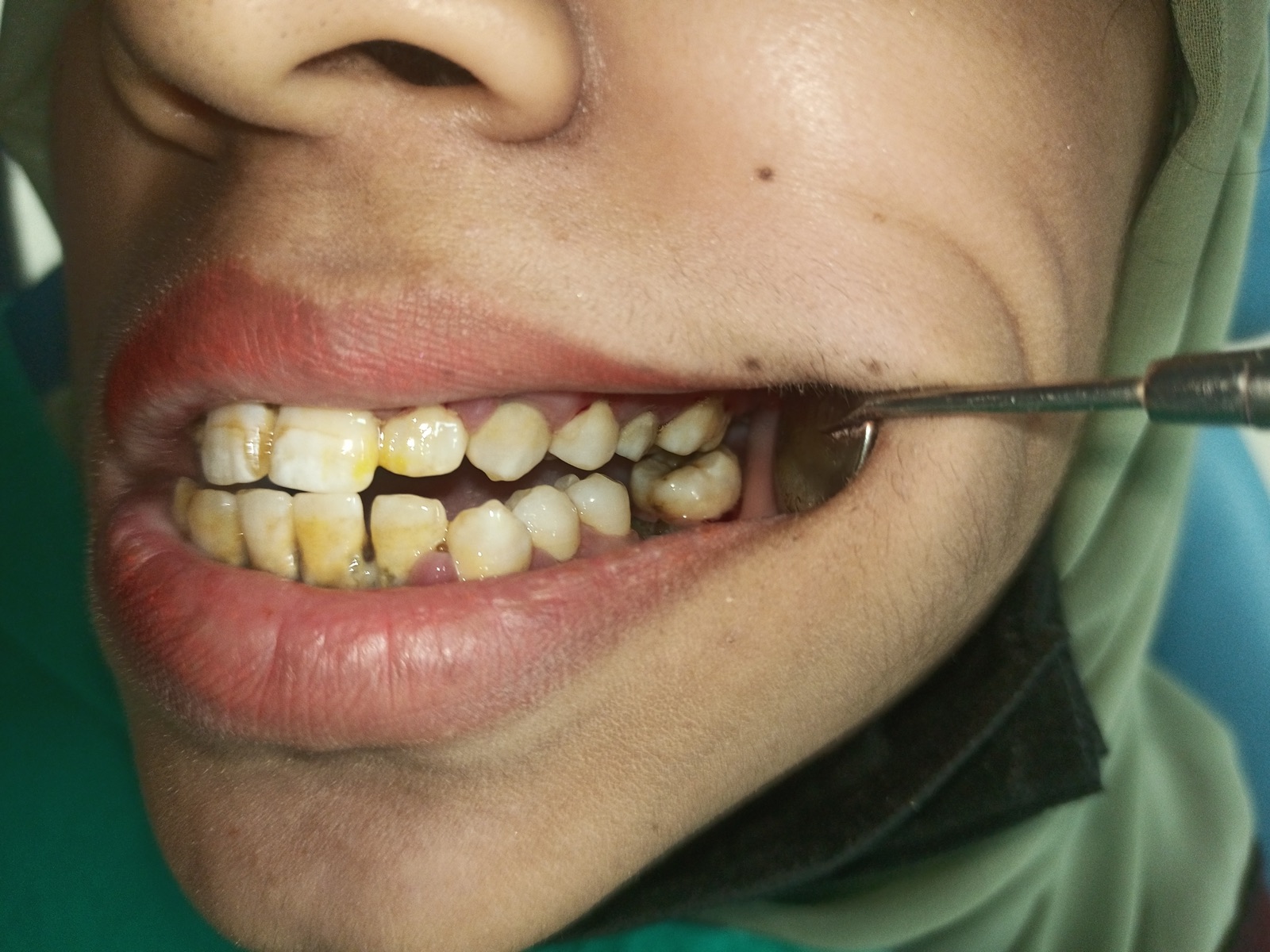
Four things — explained in plain English.
Younger patients are often nervous that something serious will be found. We always start with what we have ruled out, then walk through what we did find — without scary words and with a clear plan for each.
Coffee and tea staining
The yellow-brown band along Ms. Anam's gum line and between her teeth was tannin pigment — the same compound that leaves a ring inside an unwashed coffee cup. For a researcher who keeps a chai cooling next to her keyboard for most of an eight-hour shift, the enamel surface is exposed to that pigment for hours every day. Even with careful brushing, microscopic pits in the enamel slowly fill with it. After five to ten years, the pigment becomes visible. It is not a sign of poor hygiene. It is a sign of a long, consistent caffeine routine.
Pinpoint bleeding when flossing
When we charted her gums at six points around every tooth, two of the six areas of her mouth showed mild bleeding within seconds. This was the early form of gum inflammation we call gingivitis — an irritation, not an infection. The cause was a thin film of plaque that had settled into the embrasures (the small gaps between teeth) where her floss could only partially reach. It is fully reversible. After one cleaning and a week of normal home care, the bleeding stops on its own.
No tartar build-up, no calculus
This is the part of the exam most patients in their twenties do not expect to hear: she had almost no tartar. A faint mineralised deposit on the lingual side of her lower front teeth was the only place that needed a manual finish. The pigment people see in the mirror and the hard tartar a dentist removes are two different things. Pigment sits on the enamel like a tea stain on a cup. Tartar is a calcified deposit. Ms. Anam had the first, almost none of the second — confirmation that her brushing was effective.
No cavities, no decay, no bone loss
We took two small X-rays and looked carefully at the bone level around every tooth. The bone was completely intact. We checked every chewing surface for soft spots, dark pits, or hidden decay. None. So although she came in expecting bad news, what she actually had was the most preventive case we see all month — staining and a touch of gum irritation, on top of a perfectly healthy structure. A single thorough cleaning was enough.
Four steps. All in one sitting.
Every step was explained before it happened. She could see what we were doing in a small mirror at any point. No anaesthesia, no drama, no rush.
A quick check & photographs
We took six standardised photographs of her teeth so we could compare the after-photos to the same angles. We measured the gums at six points around every tooth — that takes about three minutes. We pulled up her two small X-rays on the screen next to her and walked through what we were seeing. Bone level fine. No hidden cavities. No deeper involvement. The staining she had been worrying about was the only finding worth treating.
~ 7 minNo anaesthesia needed
We told Ms. Anam something most clinics forget to say out loud: she did not need numbing. Her tissues were healthy. Her enamel did not have any sensitive sites on cold air. There was no thick band of tartar to lift. Skipping the topical gel is a positive — it means the cleaning is purely about lifting the pigment off enamel that is already in good shape. She felt nothing sharp at any point during the appointment.
~ 0 minUltrasonic scale + air-flow polish
A small ultrasonic tip with a continuous water spray vibrates at a frequency that lifts soft plaque and surface deposits in tiny layers. We worked in the same order every time — upper right, upper left, lower left, lower right. Then a focused air-flow pass with sodium-bicarbonate, aimed at the embrasures where her flossing could not quite reach. This is the step that lifts the tannin pigment out of the microscopic pits. Within fifteen minutes the visual difference was obvious to her in the small mirror we hold up between phases.
~ 22 minPolish & a six-month plan
A fine, low-abrasive paste applied with a slow rubber cup polishes the enamel back to its natural shine. Then we sat down for five minutes and walked through a few small habits — a softer brush, a five-second water rinse after every coffee, the same flossing she was already doing. She left with a printed sheet, our WhatsApp number, and her next visit pencilled in for July 2025.
~ 6 minDuring — air-flow phaseAfter — final polishSame patient. Same chair. Same day.
Drag the divider across the photo to compare. Both photos were taken with the same camera and lighting inside our Lahore clinic — "before" right as she sat down, "after" before she stood up.
BeforeAfterWhy a toothbrush cannot do this.
Ms. Anam asked, reasonably, why brushing for ten years had not prevented this from building up. The honest answer has three parts. None of them are her fault.
Plaque becomes tartar in 24 to 48 hours
Plaque is the soft, sticky film of bacteria that forms on every tooth, every day. Brushing removes most of it. But anywhere your brush misses — for her, the embrasures between her lower front teeth, and the back lingual surfaces of her lower molars — saliva mineralises that plaque into tartar within one or two days. Once formed, tartar is rock-hard. No toothbrush will remove it. That is what the ultrasonic scaler is for.
Coffee and tea pigments stain enamel below the surface
Tannin molecules in coffee and tea are small enough to slip into the microscopic pits of enamel. Once inside, they bond chemically. A toothbrush cleans the outer surface. It cannot reach pigments that have travelled inside the enamel. An air-flow polish — a fine spray of sodium-bicarbonate under controlled pressure — does reach them, lifts them out, and leaves the enamel intact. This is the step that gave Ms. Anam back the shade she remembered.
Mild bleeding is the gum asking for help
When a small spot of plaque sits at the gum line for long enough, the gum tissue becomes inflamed and bleeds easily — even from gentle floss. This is gingivitis, the early form of gum inflammation. It is fully reversible. The fix is not less flossing. It is removing the irritant the gum is reacting to, which is exactly what scaling does. Within seven to ten days the gum heals and stops bleeding for years.
Five questions our young patients always ask.
These are the worries we hear most often from patients in their twenties, in the words they use. Tap any one to read the long answer.
Will scaling weaken my teeth or leave me sensitive forever?+
This is the question we hear most often from patients in their twenties, and the honest answer is: no — but you may notice mild cold sensitivity for a day or two, and we will tell you why so it does not surprise you.
Even a thin layer of pigment and plaque acts like a faint insulator on the enamel. When we lift it off, the underlying surface meets cold air and cold water again. That registers as a brief sensitivity for 24 to 48 hours. In Ms. Anam's case, because there was almost no tartar, the sensitivity window was barely noticeable — she messaged us the next morning to say it had already passed.
The myth that scaling makes teeth loose comes from a different situation entirely — patients with long-standing periodontitis where calculus has been holding mobile teeth in place. Removing it makes the looseness obvious. The scaling did not cause the looseness. The disease underneath did. None of that applies to a healthy young mouth like hers.
Why did I see tiny gaps between my teeth right after the cleaning?+
If she had seen any new spacing — and she did not — it would have been the original spacing of her teeth becoming visible again, not new gaps appearing.
In patients with heavier deposits, tartar can fill the small embrasures between teeth like cement between bricks, and removing it briefly exposes the actual anatomy. Ms. Anam had almost no tartar, so this was not a concern in her case. What she did notice on day one was that the enamel reflected light differently — a small surprise that comes from polishing micro-pigment out of the surface pits, nothing more.
Hiding gaps with deposit is never a good plan, even at her age. Above the gum line it leads to deposit below the gum line, which leads to gum inflammation, which leads — over years — to actual recession. Cleaning is the way to stop that progression before it starts.
How painful is the scaling itself? Will I need any anaesthesia?+
Ms. Anam did not need any anaesthesia at all — no injection, no topical gel, nothing.
Routine scaling on healthy young tissues feels like a faint vibration with cool water running over the tooth at the same time. The sensation is best described as a buzz and a slight pressure where soft deposit is being lifted off. In her case, even that was minimal because there was almost no calculus density to lift.
Where patients sometimes feel a sharper sensation — for example along the lower-front gum line in heavier cases — we use a topical numbing gel on a cotton bud, no needle. We have only used a local anaesthetic injection for routine cleaning in roughly one in twenty cases. Almost no twenty-something patient ever needs it.
Will the coffee stains come back? How long does the result last?+
Yes — slowly — if nothing changes. No — for years — if she adds the small water-rinse habit we asked her to add.
Coffee, tea, paan, and tobacco are the main staining culprits in our patient population. Of those, Ms. Anam only drinks coffee and tea — but she drinks them all day, every day, at her desk. The pigment lays down a microscopic film every time. Brushing removes most of it within twenty-four hours. The stain visible six months later is what brushing missed and what saliva later mineralised.
The single most useful habit she can add is a five-second rinse with plain water after every cup. That is the difference between coming back twice a year for a routine polish and coming back four times a year because the stain pattern has reformed.
We re-photograph every patient at six months and again at twelve. She will see her own trend on a printed sheet, and we adjust the recall interval if her habits or stain pattern change.
How much does this cost? Are there hidden charges?+
A standard scaling and air-flow polish for a young patient like Ms. Anam at Odonto is PKR 4,500, all-inclusive. That covers the full chart, the X-rays we needed, the ultrasonic scale, the air-flow stain lift, the rubber-cup polish, and the printed aftercare sheet she took home.
There is no extra charge for the consultation, no charge for the photographs, and — in her case — no charge for any topical gel because none was used. If during the cleaning we had discovered something that needed more (we did not), we would have stopped, shown her the X-ray, explained why, and written a separate quote before continuing. Nothing happens without your sign-off.
Ms. Anam paid PKR 4,500. There were no add-ons. Her next six-monthly visit will be the same fee.
The follow-up visits.
One scaling is not the end of a case — it is the beginning of a maintenance cycle. Every patient at our clinic gets the same follow-up structure: a quick review at one week, a comparison at six months, and a full repeat appointment at twelve months. Here is how Ms. Anam's went.
She came in for a ten-minute review at one week. We measured the gums again at the same six points. Bleeding had reduced from two sextants down to zero — the irritation had fully resolved. She had started rinsing with water after coffee within forty-eight hours of the appointment. Photographs retaken so we had a clean baseline going forward.
Ms. Anam messaged on WhatsApp at the four-week mark. She had switched to a soft Oral-B Sensitive brush. The water-rinse-after-coffee habit had stuck — she keeps a glass of plain water on the lab bench next to the chai now. She had not tried any whitening at home — we had asked her to wait at least two months and she had listened.
She returned in July for the six-month recall. Faint stain re-accumulation was visible at the upper interproximal sites — entirely expected for a heavy coffee drinker. Routine air-flow polish performed in eighteen minutes. No new gingival inflammation. Same six photographs taken so we could compare against January. She paid PKR 4,500 again. We have her next visit on the calendar for March 2026.
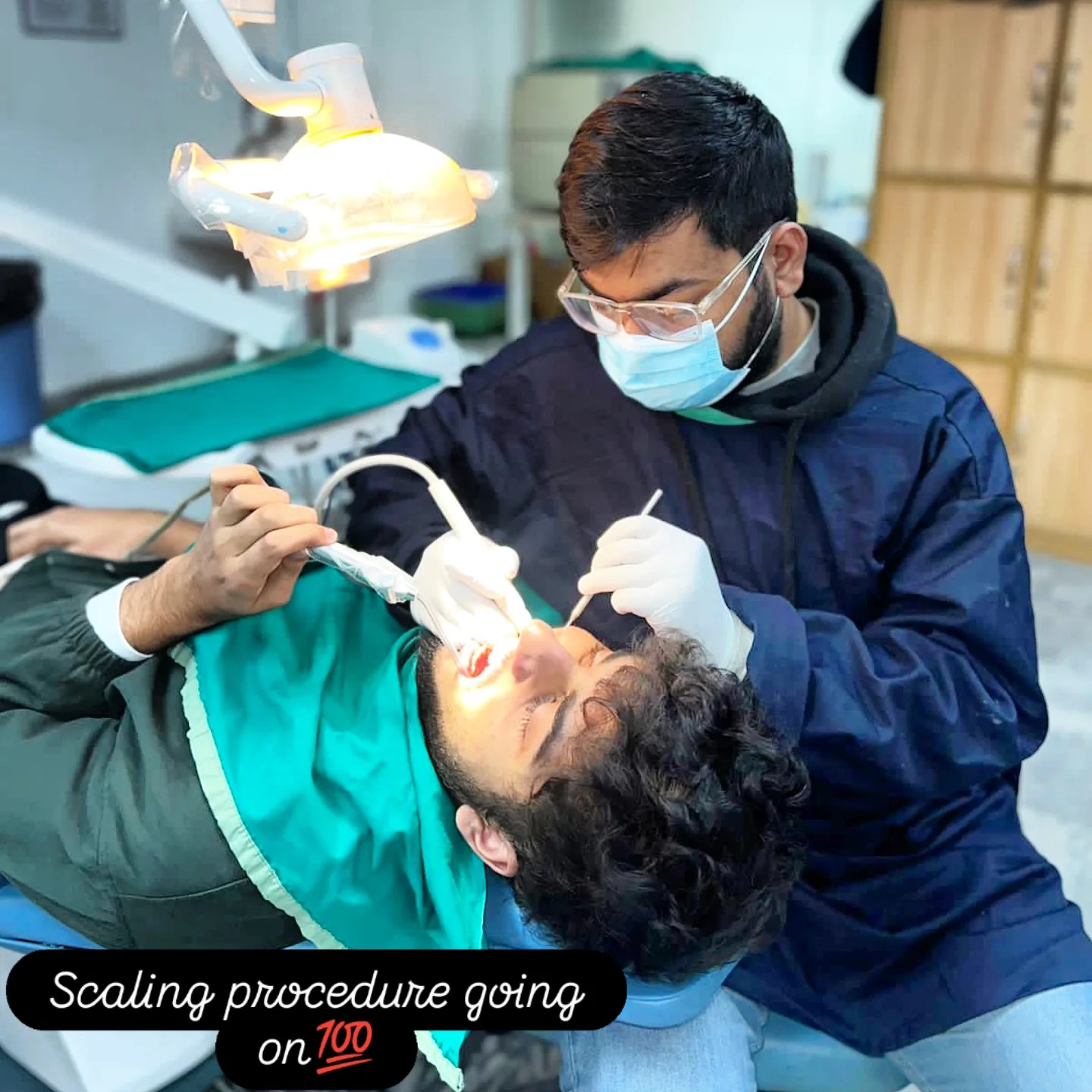
Dr. Mian Momin Ahmad
“The patients who walk in at twenty-six rarely need anything serious at fifty-six, precisely because they walk in at twenty-six. Ms. Anam is exactly the kind of case I want every young Lahore professional to see — there was no disease to fight, no whitening to consider, no expensive add-on worth recommending. Routine scaling, an air-flow polish, and a five-second water rinse after coffee. That is the entire long-term plan. The result holds at six months because of what she does at the lab bench, not because of what we did in the chair.”
Six small habits that hold the result.
A clean is not the end of the story. The teeth stay this way only if a few small things are done at home. These six are the only ones we asked Ms. Anam to commit to — none of them require buying anything expensive.
Use a soft brush — gently
Most twenty-somethings we see brush too hard. The enamel near the gum line is thinnest exactly where firm scrubbing wears it away first, exposing the slightly yellower root surface underneath. We sized Ms. Anam up for an Oral-B Sensitive brush and asked her to think about it less as scrubbing and more as massaging — small circles, two minutes, gentle pressure.
Rinse with water after every coffee
A five-second water rinse after coffee or chai removes the bulk of the tannin pigment that would otherwise sit on the teeth and slowly bond into the enamel by the next morning. Ms. Anam drinks four to five coffees a day at the lab bench. Five rinses a day. That single habit, more than anything else, decides whether her stain pattern returns in three months or stays clear for fifteen.
Floss once a day — the spacing is tight
Her embrasures are narrow, so regular waxed dental floss is enough — no interdental brush needed. Once a day is the right cadence. We asked her to do it at night, in front of the bathroom mirror after dinner, before brushing. It takes about ninety seconds. The floss does the work the brush cannot do at the contact points where most stain and decay starts.
Treat bleeding as a signal, not a punishment
Many patients see bleeding when they brush or floss, get scared, and start brushing or flossing less. This is the opposite of what works. The bleeding is the gum at that spot telling you it is irritated and needs more — gentle — cleaning, not less. After her scaling we asked her to brush firmly enough that any residual bleeding lasts about three to five days. After that, the gum heals and stops bleeding for years.
Skip whitening toothpaste
Most "whitening" pastes are mildly abrasive — they work by sanding off surface stain. Right after a professional polish, the enamel surface is at its smoothest. Using an abrasive paste at that point does more harm than good. We asked her to use a regular fluoride toothpaste (Sensodyne Sensitive or Colgate Total) for at least two months. Whitening, if she ever wants it, is a separate conversation we can have at the six-month recall.
Come back at six months
For a young patient with mild staining and healthy gums, six months is the right interval — long enough that home care is meaningfully tested, short enough that nothing severe accumulates. Each follow-up clean takes 25 minutes, costs PKR 4,500, and we take the same six photographs so she can see the trend year over year. Her first recall is on the calendar for March 2026.
The patients who book at twenty-six rarely need anything serious at fifty-six.
We do not lecture young patients about postponement. The reasons we hear are real — a thesis deadline, a project at work, a fear that a cleaning will somehow be expensive or painful. None of them are stupid. But the longer a young person waits, the more the case slowly drifts from a 35-minute polish to something else.
What waiting another five to ten years actually does, in plain terms:
None of that is a scare tactic. It is the timeline we see, in our chair, in this clinic, every week. Ms. Anam came in at twenty-six. The fix at this stage is still a single 35-minute visit. The fix in ten years is rarely as simple.
More on scaling, and the conditions behind it.
Three more patients like Ms. Anam.
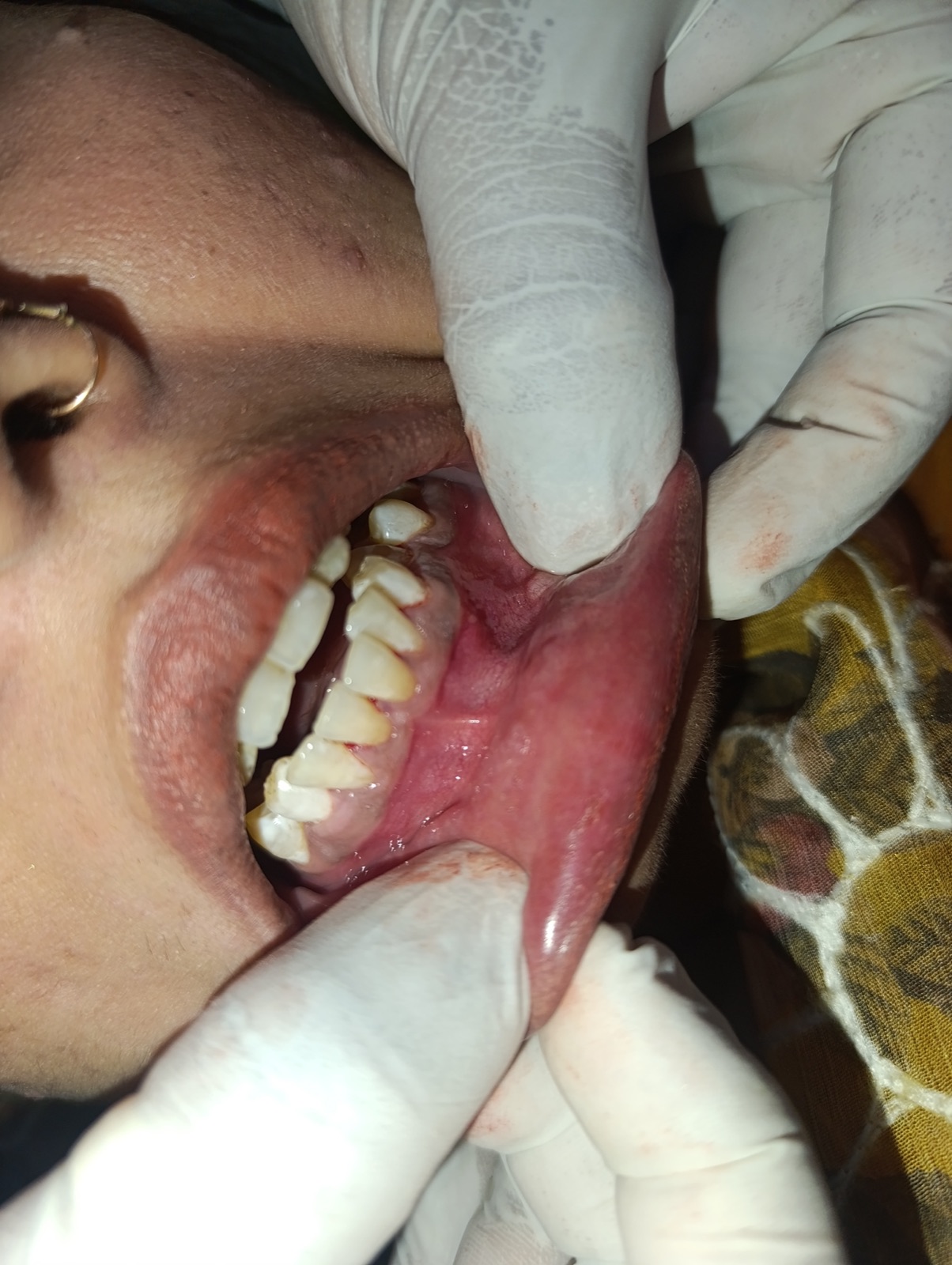
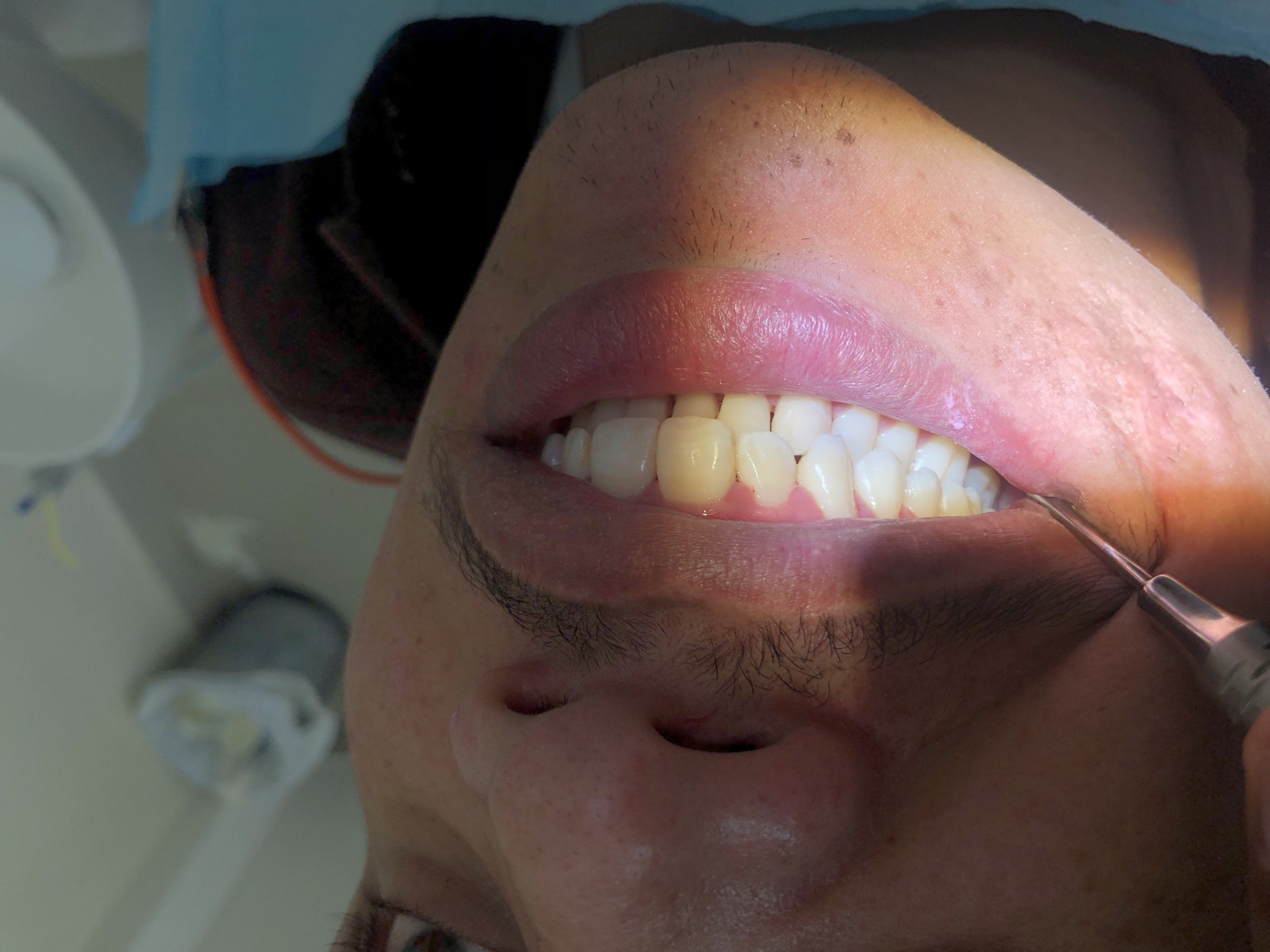
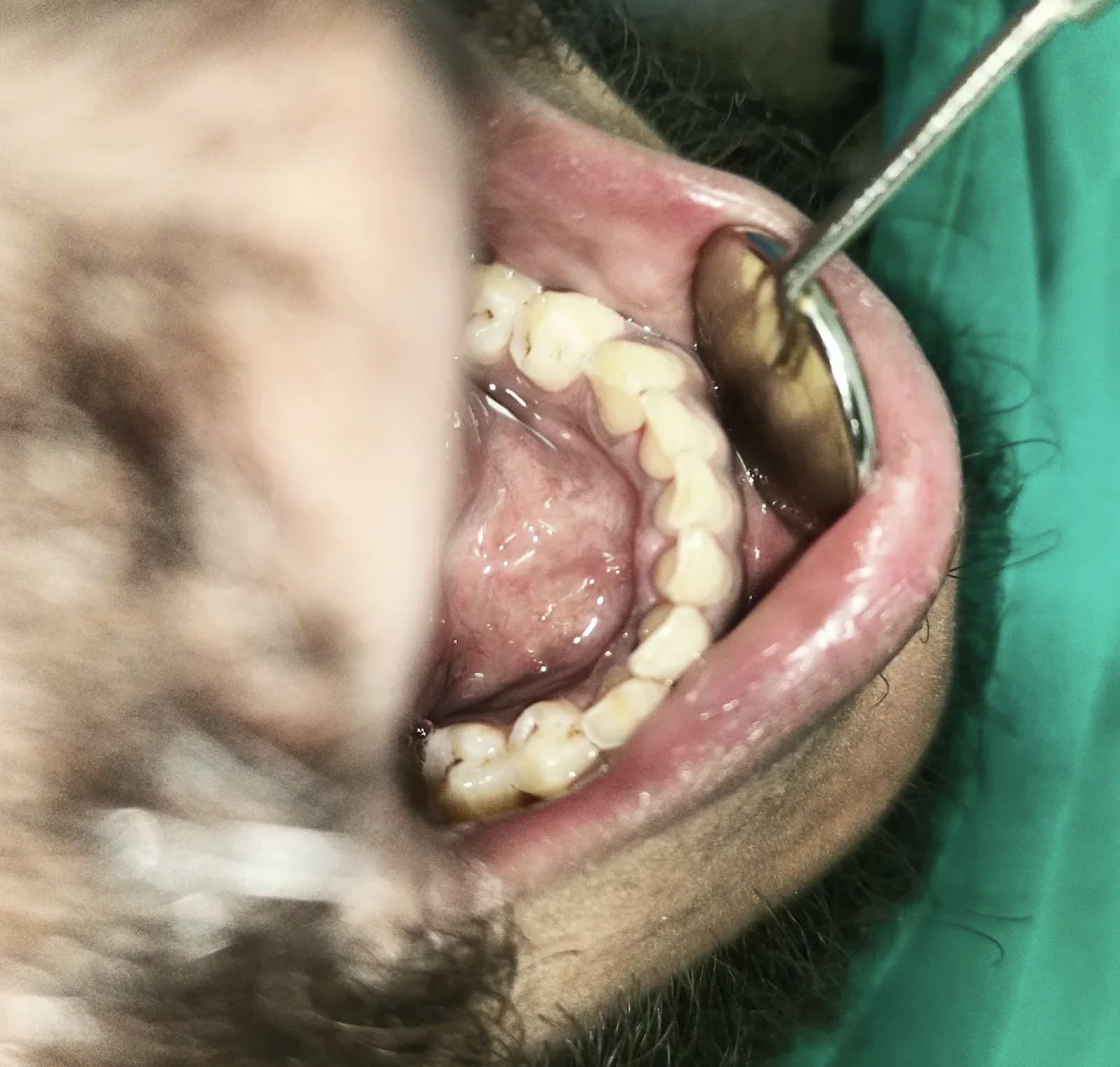
Every case in this archive is a real Odonto patient with their consent. Names are accurate where the patient was happy to share them, age ranges are real, and every photograph was taken in our Engineers Town clinic.
Want a result like Ms. Anam's?
The first 15 minutes are free. We will examine your teeth, take any photos needed, and put a written quote in your hand. There is no pressure to book the cleaning the same day, and there are no hidden charges if you do.