How a Lahore imam discovered what was hiding underneath ten years of stain
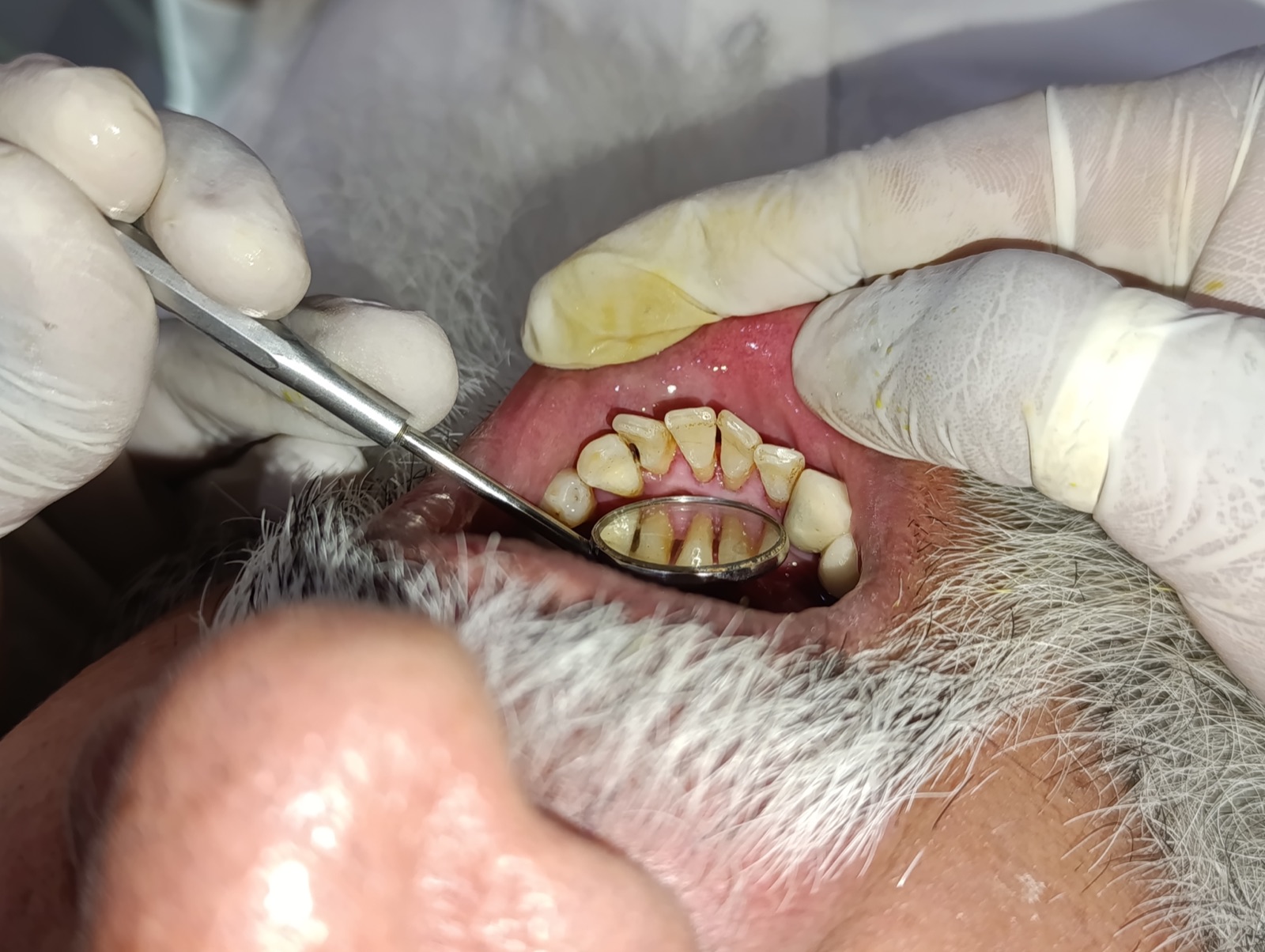
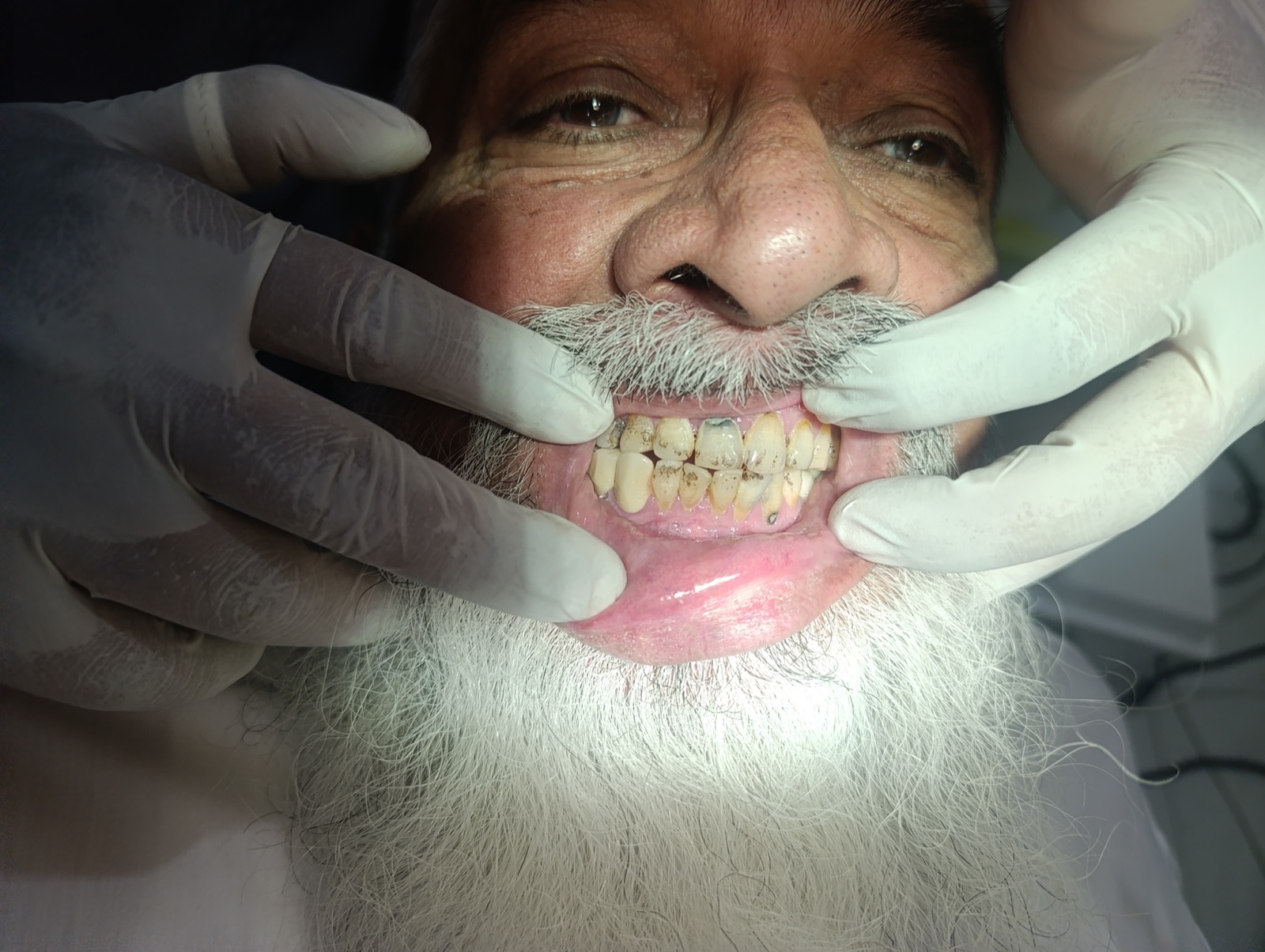
Qari Sultan Mahmood is fifty-five and the imam at a neighbourhood mosque in Lahore. His chief complaint when he walked in was the dark discolouration across his front teeth — he was convinced he had multiple cavities. A heavy chai routine and three cigarettes a day between azaans had laid down a band of stain so thick that neither he nor we could tell, by eye, what was just colour and what was actual decay. This is the story of a deliberately staged appointment — clean first, then read.
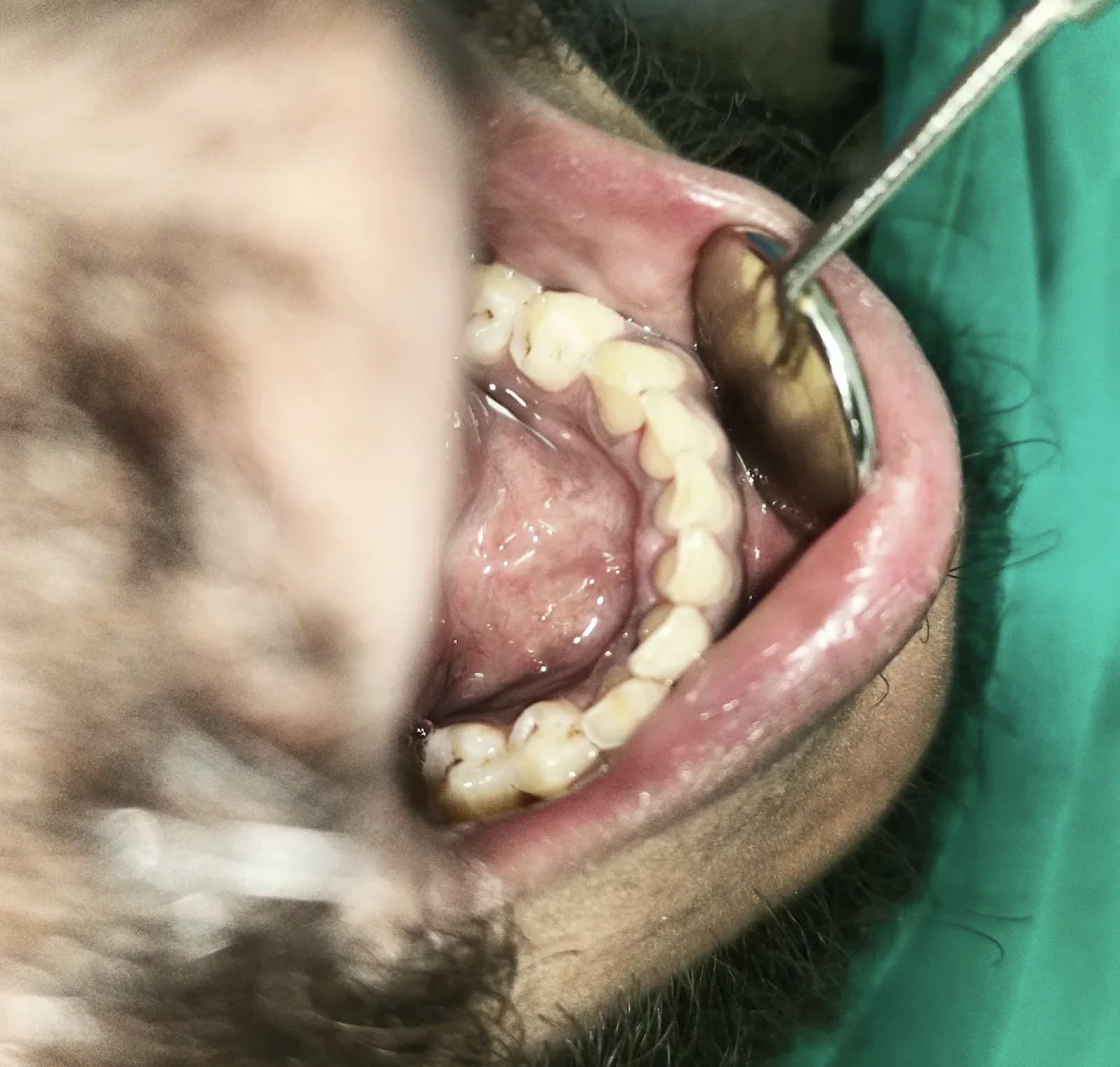
 Before
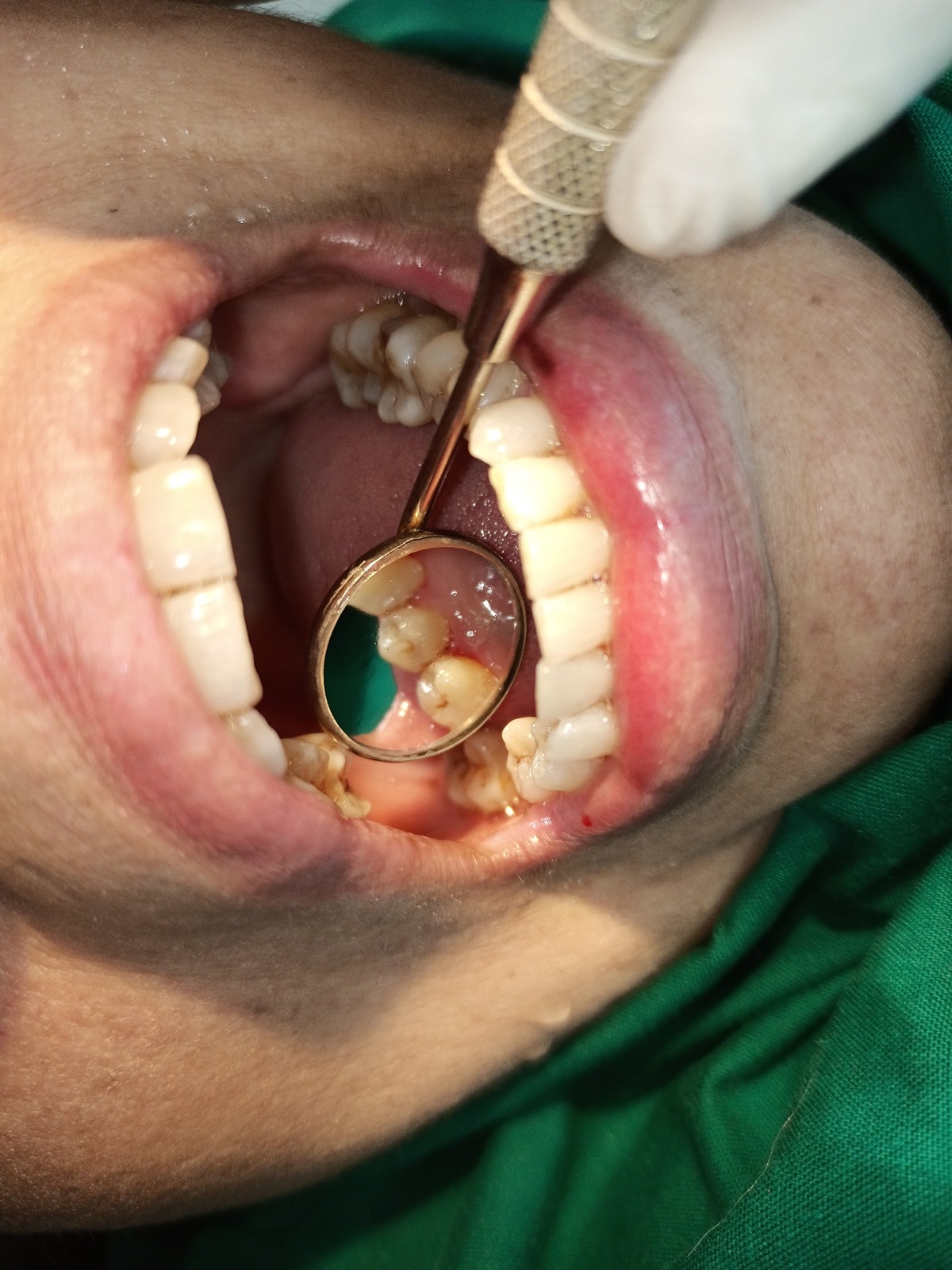
 After
AfterHe had stopped smiling in front of the congregation.
Most patients we see at this stage of staining are not in pain. They are people who have lived with the discolouration for so long that they have become quietly anxious about what is hidden underneath. Qari Sahib is one of them.
Qari Sultan Mahmood is fifty-five and the imam at a neighbourhood mosque in Lahore. His day starts before fajr and runs until isha. Most of it is spent reciting and instructing the children in the evening Quran class. The tea routine grew slowly across the three decades he has been in this role — five to eight cups a day, mostly between prayers, mostly with three or four spoons of sugar. The cigarettes came later — three a day, taken with the chai during downtime between azaans. He does not smoke at home. He has never smoked in front of the congregation. The cigarettes are a private habit he is not proud of, and he said as much in the first ten minutes of the consultation.
By the time he sat in our chair, the front teeth were so darkly stained that the boundary between stain and any underlying cavity was impossible to determine by eye. He had been bracing for a long list of repairs. He was convinced he had multiple cavities. The discolouration had begun to weigh on him publicly — he had stopped opening his mouth fully when speaking to the congregation, and one of his sons had gently pointed out that the gap was visible from the front row. That, more than anything else, was what finally brought him in.
We took photographs at four standardised angles, charted pocket depths at six points around every tooth, and reviewed two bitewing X-rays carefully on the screen. Then we did something that does not always happen at a first appointment in this clinic — we sat back and said, plainly, we are not going to commit to any restorative work today. The reason was clinical, not evasive. The stain layer was too dense to read through. Until it was off, the only honest thing we could do was clean the teeth and look again.
He understood the reasoning immediately. He had spent thirty years explaining nuanced points of recitation to congregants twice his age; he was not insulted by the suggestion that a clean was a prerequisite for a diagnosis. He asked for the plan in writing. We gave it to him on the spot.
We also, in the same conversation, raised the cigarettes — carefully, factually, and only after the rest of the plan had been agreed. We did not lecture. We explained how nicotine constricts the vessels in the gum, slows healing, and accelerates the recurrence of stain. We told him the next five years matter more, clinically, than the previous thirty. We offered our cessation literature and a phone number for a service we trust. He took both. He asked one short question — "and if I do reduce, how soon will the gum show it?" — and we told him: within three to six months, measurably. That was the entire conversation. We did not return to it for the rest of the appointment.
We made the appointment for the next afternoon, between Zuhr and Asr, and asked him to bring no expectations of a long quote at the end. We would clean. We would re-examine. We would chart only what was genuinely there. Anything more would happen at week four.
Four things — explained in plain English.
Most patients are nervous that something serious will be discovered. We always start with what we've ruled out, then walk through what we did find — without scary words and with a clear plan for each.
A decade of black tea + nicotine staining
Years of strong, sweetened chai layered with the tar from cigarettes had laid down a dense band of brown-black extrinsic stain across almost every visible surface of his teeth. This is the most common type of stain we see in older patients in Lahore, and the chemistry behind it is simple. Tea contains tannins — natural compounds that bind tightly to enamel and slowly turn the surface yellow, then brown. Tobacco smoke leaves a separate film of tar that bonds on top of the tannin layer. Together they produce a stain that looks almost frighteningly dark from the outside, and that is precisely what had brought him in. The good news for Qari Sahib was that the stain was sitting on top of clean enamel — extrinsic, not intrinsic. The colour was not in the tooth. It was on the tooth.
Cleaning needed before any caries assessment
This was the most important conversation of the first appointment, and the one that decided how the rest of the visit would run. With a stain layer this dense, neither the patient nor the dentist can reliably tell what is just discolouration and what is actual cavity underneath. Some of what looked like decay would turn out to be just stain. Some might be real. We could not commit to any restorative diagnosis through that layer of stain — that would have been guessing. The plan was therefore deliberately staged: clean first, read second. Once the enamel was disclosed, every surface could be inspected properly, and only the genuinely suspect lesions would be charted for restoration.
Mild gum inflammation, smoking-accelerated
Bleeding-on-probing in three of the six areas of his mouth, with localised four-millimetre pockets at the upper-back molars. In a non-smoker of the same age this would have been routine; in a smoker of thirty years it is the first warning sign that the periodontal trajectory is bending in the wrong direction. Nicotine constricts the small blood vessels in the gum, slows the healing response, and masks early bleeding by making the gum look paler than it actually is. The conversation about smoking, when it came, was framed around exactly this — the next five years matter more than the previous thirty.
X-rays show no advanced bone loss
This was the most reassuring part of the consultation. We took two bitewing X-rays and looked carefully at the bone level around every tooth. The bone was intact. Despite thirty years of cigarettes and a heavily sweetened tea routine that had run for longer than that, the underlying foundation of his teeth was still in good shape. The localised four-millimetre pockets at the upper molars were the early end of gum disease, not the late end. So although the mouth looked dramatic from the outside, the deeper picture was much more treatable than he had been imagining. He did not need surgery. He did not need extractions. He needed a thorough cleaning, a careful re-examination, and, in his own time, a conversation about the cigarettes.
Four steps. All in one sitting.
Every step was explained before it happened. He could see what we were doing in a small mirror at any point. There was no rush.
A careful exam + the two-stage explanation
Four standardised photographs, six-point pocket charting, two bitewing X-rays. Then we sat back and explained the most important part of the plan in plain language: we would not be quoting any restorative work today. The stain was too dense to read through. The first visit was about cleaning the teeth so that, for the first time in years, we could actually see what was under the discolouration. Any genuine cavities found at that point would be charted and scheduled for a separate restorative visit four weeks later. He understood the reasoning immediately and asked for the plan in writing.
~ 10 minTopical numbing for the dense band
Where the stain and calculus were thickest — the cervical band of the upper-back molars, where his pockets were also slightly deeper — we applied a topical numbing gel with a cotton bud. No injection was needed for the rest of the dentition, and he chose not to use anaesthetic anywhere else. He felt a slight buzzing sensation when the scaler touched those teeth, never a sharp pain.
~ 5 minUltrasonic + heavy polishing — the workhorse phase
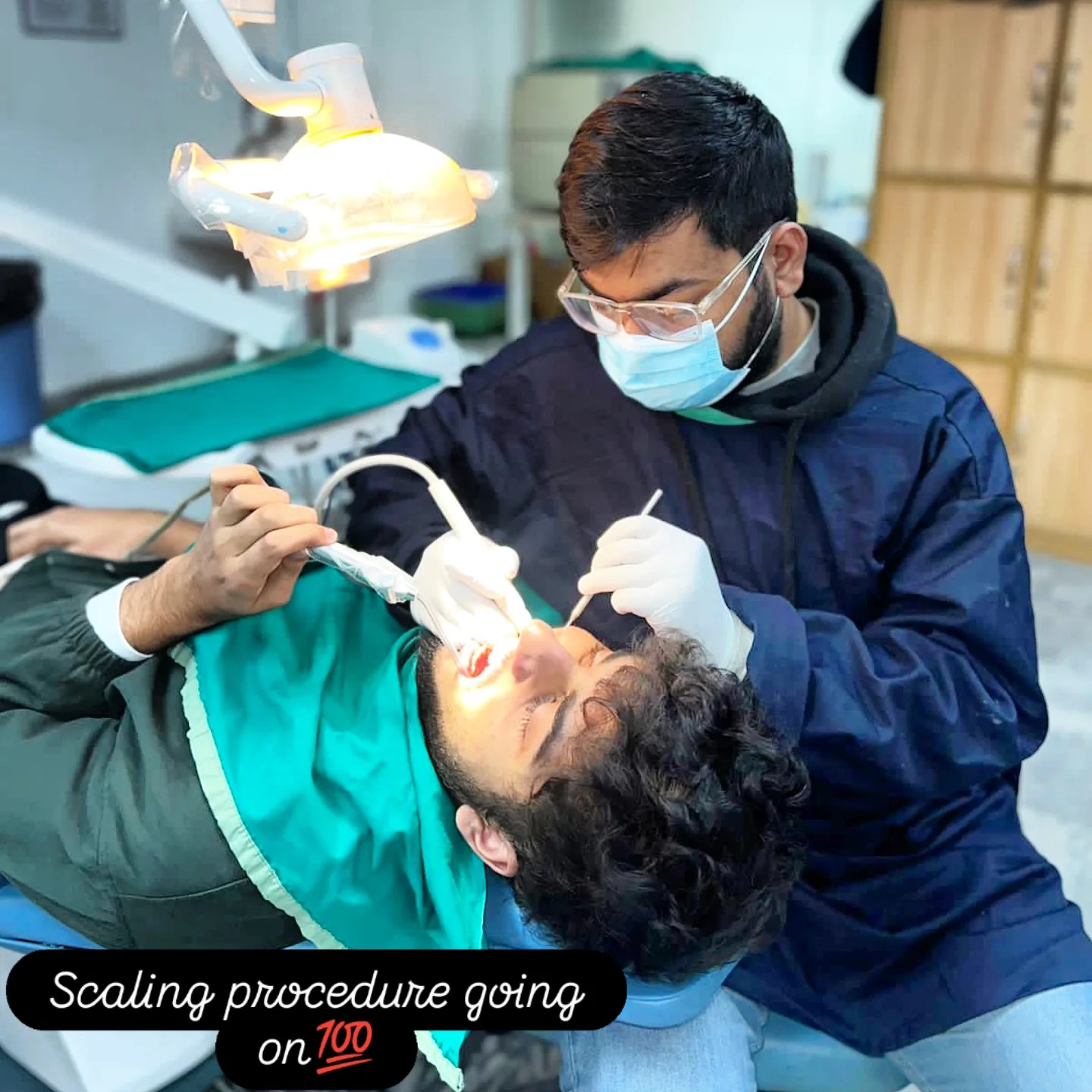
A small ultrasonic tip with a continuous water spray vibrates at a frequency that lifts calculus off in tiny layers. We worked in the same order every time — upper right, upper left, lower left, lower right. For a stain this dense, the ultrasonic alone is not enough; we followed it with a two-pass rubber-cup polish — a medium-grit pass to break the final stain film, then a fine-grit pass for the finish. The stain lifted in sheets, which told us early that the bulk of it was extrinsic — sitting on the enamel, not inside it. The water spray kept the tooth cool throughout.
~ 25 minFinal polish + the cessation conversation + restorative booking
A fine paste applied with a slow rubber cup brought the enamel back to its natural shine. Tongue cleaned in the same step. Then a frank, respectful conversation about the cigarettes — not a lecture, just a discussion of how nicotine slows gum healing and accelerates the recurrence of stain. We offered our cessation literature and a phone number; we did not insist. Two suspect surfaces, identified after the cleaning, were charted for a restorative visit at week four. He left with a printed sheet, our WhatsApp, and the next appointment booked.
~ 10 min During — ultrasonicAfter — final polish
Same patient. Same chair. Same day.
Drag the divider across the photo to compare. Both photos were taken with the same camera and lighting inside our Lahore clinic — "before" right as he sat down, "after" before he stood up.
BeforeAfterWhy we clean before we read.
Patients often ask, reasonably, why we did not just chart the cavities at the first visit. The honest answer has three parts. None of them are about pricing or pacing — they are about getting the diagnosis right.
Stain and decay can look identical from the outside
Heavy extrinsic stain — the kind tea and tobacco produce together — can mimic the surface appearance of a small cavity. From outside, both look like dark patches on the enamel. The only way to reliably tell them apart is to remove the stain layer first and then re-examine the surface underneath. Anything we charted as a cavity through that stain layer would have been a guess.
Tea pigments stain enamel; tar bonds on top
Tannin molecules in tea slip into the microscopic pits of enamel and bond chemically. A toothbrush cleans the outer surface; it cannot reach pigments that have travelled inside the enamel. Tobacco tar leaves a separate, sticky film that bonds on top of the tannin layer. A polishing paste applied professionally — first medium grit to break the film, then fine grit to finish — does reach both layers and lifts them out without damaging the surface underneath.
Nicotine slows healing — and hides early bleeding
Nicotine constricts the small blood vessels in the gum tissue. This does two things you do not want — it slows the healing response after a cleaning, and it masks early bleeding by making the gum look paler than it actually is. So smokers can carry early gum disease for years without noticing the warning sign that non-smokers see in the basin every morning. Reducing or stopping smoking restores normal circulation within three to six months.
Five questions our patients always ask.
These are the worries we hear most often, in the words our patients use. Tap any one to read the long answer.
Will scaling weaken my teeth or make them more sensitive forever?+
This is the single most common worry we hear, and the honest answer is: no — but you may feel mildly sensitive for the first one to three days, and we want to explain why so it does not surprise you.
Calculus and heavy stain together act like an insulator over the tooth. When we remove them, the enamel underneath is exposed to cold air and cold tea again, sometimes for the first time in years. That sensation registers as sensitivity for 24 to 72 hours. Using a sensitive toothpaste like Sensodyne for one week handles it almost completely. After that, the sensitivity is gone — and the tooth is structurally stronger because the underlying surface is now clean and able to absorb fluoride from your toothpaste again.
For Qari Sahib specifically, the post-scaling sensitivity was mild and lasted about four days. He continued his usual chai routine throughout — slightly cooler tea for the first three days, then back to normal.
Are you going to lecture me about the cigarettes?+
No. We do not lecture. The reason patients with a smoking history sometimes delay coming in is exactly this fear — that the entire appointment will be a sermon about cigarettes — and it is the wrong reason to delay clinical care.
What we do is straightforward. We assess what is actually happening in the mouth. We clean the teeth. We lay out the findings honestly. If smoking is part of the picture — and it almost always is — we explain how it affects the gum tissue, the staining, and the longer-term periodontal risk. We offer cessation support if you want it. We do not insist, we do not moralise, and we do not condition the rest of the treatment on you stopping.
Qari Sahib had clearly been thinking about the cigarettes for years. He did not need a dentist his own age telling him what he already knew. He needed the literature, the phone number, and the room to come back to the question on his own schedule. That is what he got.
How painful is the scaling itself? Will I need an injection?+
For routine scaling — which is most of what Qari Sahib had — most patients do not need any anaesthesia at all. The ultrasonic tip vibrates at a high frequency and runs cool water over the tooth at the same time. The sensation is best described as a buzzing or a tickle, and a slight pressure where the calculus is being lifted off.
Where the stain and calculus were thickest — the cervical band of the upper-back molars in his case — we applied a topical numbing gel with a cotton bud. No injection. He felt a slight buzzing sensation when the scaler touched those teeth, never a sharp pain. The remainder of the dentition was treated without any anaesthetic at his request.
Injections are reserved for patients with very deep deposits below the gum line. That applies to roughly one in twenty cases. Qari Sahib did not need one.
Will the stains come back? How long does the result last?+
Yes — slowly — if the routine does not change. Slower — for years — if a few small habits are added.
Tea, tobacco, and paan are the main culprits in our patient population. The stain lays down a microscopic film every time you drink or smoke. Brushing removes most of it within 24 hours. The stain you see on a tooth six months later is what brushing missed and what the saliva later mineralised.
The single most useful habit to add is a five-second water rinse after every cup of tea. That is not optional advice — for someone drinking six to eight cups a day, it is the difference between coming back at three months for a routine clean and coming back at six weeks for a much heavier one.
We re-photograph every patient at three months, again at six, and again at twelve. You can see your own trend on a printed sheet. Smoking is the biggest variable in how fast the stain returns; reducing it by even one cigarette a day measurably slows the rate.
How much does this cost? Are there hidden charges?+
The first visit — the scaling, polishing, and the structured caries re-examination after the polish — was PKR 4,500, all-inclusive. That covers the full chart, the X-rays, the scaling itself, both polishing passes, the tongue clean, and the printed aftercare sheet you take home.
There is no extra charge for the consultation, no charge for the photographs, and no charge for the topical anaesthetic gel. The two restorative surfaces we found and charted will be billed separately at the week-four visit. We confirmed the fee for those in writing on the day, so there were no surprises.
Qari Sahib paid PKR 4,500 for the first visit. The week-four restorative appointment was quoted at a separate fee, agreed in advance. His three-monthly recall thereafter will be PKR 4,500 each.
The follow-up visits.
One scaling is not the end of a case — it is the beginning of a maintenance cycle. For smokers we run a slightly tighter follow-up than for non-smokers: a quick review at one week, the restorative visit at four weeks, and a routine recall at three months thereafter. Here's how Qari Sahib's went.
He came in for a ten-minute review at one week. Bleeding-on-probing reduced from three sextants down to one. The localised four-millimetre pockets at the upper-back molars had begun to tighten. No post-scaling sensitivity to report. The chlorhexidine mouthwash was being used as prescribed. Tea consumption had not changed; smoking, by his own account, was down from three cigarettes a day to two.
The two surfaces charted at the first visit were re-examined under loupes and a fresh bitewing. Both turned out to be small carious lesions — superficial, conservative composite restorations placed on the day. No anaesthetic injection required, only topical. Total chair time forty minutes. Cost agreed in writing on the day of the first visit; no surprises at billing.
He returned in September for the three-month recall. Mild stain re-accumulation visible at the cervical band — entirely expected for a six-cup-a-day chai routine, even with the rinse habit in place. Routine scaling and polishing performed in 30 minutes. No new gingival inflammation. Smoking down to one cigarette a day. He paid PKR 4,500. Next recall in December.
Dr. Mian Momin Ahmad
“The clinical principle I want every operator and every patient to take from this case is simple: with very heavy stain, the assessment of underlying tooth structure is impossible until the cleaning is done. This is why we do not quote restorative work on the first visit when the stain is this dense. We clean. We re-examine. We chart only what is genuinely there. Anything else is guessing, and a patient who is bracing for the worst deserves something better than a guess. Qari Sahib walked in expecting a long list of fillings. He walked out with two — and a clear, unhurried conversation about the cigarettes that was his to continue at his own pace. That is the shape of dental care that respects the patient.”
Six small habits that hold the result.
A clean is not the end of the story. The teeth stay this way only if a few small things are done at home. These six are the only ones we asked Qari Sahib to commit to — none of them require buying anything expensive, and the cessation literature was offered, never insisted on.
Soft brush + Bass technique
A soft-bristled brush is the right tool for a smoker with a thirty-year history. The gum has already been through enough mechanical and chemical stress; a hard brush adds insult to injury. Modified Bass technique — bristles angled forty-five degrees towards the gum line, gentle vibration in tiny circles, then a sweep towards the chewing surface. Two minutes total, twice a day. We sized him for an Oral-B sensitive brush before he left.
Five-second water rinse after every chai
A five-second rinse with plain water after each cup of tea removes most of the pigment that would otherwise sit on the teeth and harden into stain by the next morning. Qari Sahib drinks six to eight cups a day. Six to eight rinses a day. That single habit, more than any toothpaste, decides whether the staining returns visibly in three months or in fifteen. He keeps a water bottle next to the kettle in the mosque office for exactly this.
Reduce the sugar in the tea
His chai is heavily sweetened — three to four spoons of sugar per cup, by his own account. Sugar feeds the bacteria that produce acid on the teeth, and acid is the ingredient that turns surface staining into actual decay over years. We did not ask him to give up sugar entirely. We asked him to bring it down to one spoon per cup, gradually, over the next two months. Combined with the rinse, this is the single most useful change he can make to the routine.
Smoking cessation referral — offered, not pressed
We do not push smoking cessation. We offer it. Qari Sahib left with our cessation literature and the phone number of a service we trust. Whether and when he picks it up is entirely his decision. What we did want him to know is that the first three to six months after stopping are when the gum tissue recovers fastest — circulation returns, healing accelerates, and the trajectory of the periodontal disease bends back. The longer he waits, the harder that window becomes.
Restorative appointment booked for week 4
During the post-polish examination we identified two surfaces that genuinely warranted restorative review — small carious lesions hiding under what had appeared, before cleaning, to be just heavy stain. These have been charted and an appointment is on the calendar for week four. The plan at that visit is conservative composite restorations — no crowns, no root canals, no extractions. We confirmed the fee for that visit in writing on the same day so there would be no surprises.
Three-month recall, not six
For most patients, six months is the right interval between routine cleanings. For smokers, we shorten this to three months. The reason is simple — staining returns faster, gum inflammation flares more readily, and small pockets at the back molars need to be monitored more often than the average mouth. Qari Sahib's next clean is on the calendar for September 2025. Each three-monthly visit takes 30 minutes, costs PKR 4,500, and includes a fresh round of photographs to track the trend year over year.
We do not lecture. We assess, we clean, we lay out a plan.
Patients who smoke or drink heavy chai often delay coming in because they assume they will be lectured at, judged, or told to give up everything they enjoy before any cleaning happens. That is not how this clinic works. The reasons we hear are real, the routines are decades old, and the work of changing them is slow. None of it is a moral question for us — it is a clinical one.
What waiting another year actually does, in plain terms:
None of that is a scare tactic. It is the timeline we see, in our chair, in this clinic, every week. The fix at this stage is still a single 50-minute visit and a structured re-examination. The fix in five years is rarely as simple. We will not lecture you about the cigarettes when you walk in. We will, in our own time, lay out what is actually happening in your mouth and what your options are. The rest is yours.
More on scaling, and the conditions behind it.
Three more patients like Qari Sahib.
Every case in this archive is a real Odonto patient with their consent. Names are accurate where the patient was happy to share them, age ranges are real, and every photograph was taken in our Engineers Town clinic.
Want a result like Qari Sahib's?
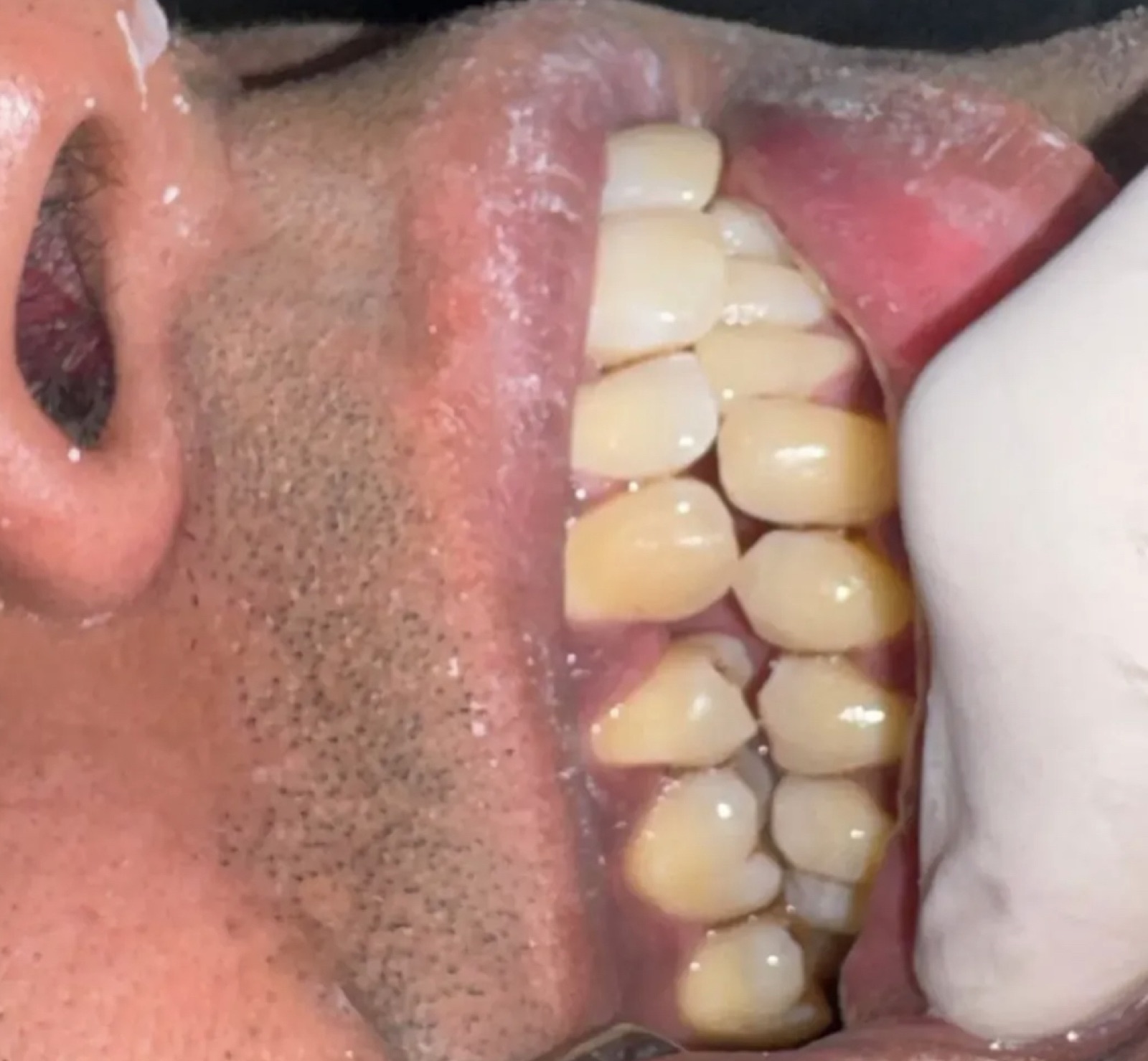
The first 15 minutes are free. We will examine your teeth, take any photos needed, and put a written quote in your hand. There is no pressure to book the cleaning the same day, and there are no hidden charges if you do.