Root Canal Treatment in Lahore: Painless RCT, Cost & Procedure
Root canal treatment in Lahore is the painless modern fix for a tooth that has been infected, abscessed, or is throbbing with pulp pain. At Odonto, we perform painless root canal treatment using rubber dam isolation, rotary nickel-titanium cleaning, and three-dimensional gutta-percha sealing — single-visit for most cases and multi-visit only when active infection demands it. The full root canal procedure takes 60–90 minutes for a single-visit RCT. The root canal treatment price in Pakistan at Odonto starts from PKR 10,000 for an anterior tooth — no hidden charges, written quote at the consultation.
 PMDC certified
The painless way to save an infected tooth.
Root canal treatment — also called RCT or endodontic treatment — is the procedure that saves a tooth when its inner pulp has become infected or inflamed beyond recovery. Instead of pulling the tooth out, the dentist cleans out the infected pulp, disinfects the empty canals, and seals the inside of the root permanently. The natural tooth stays in place — only the diseased tissue is removed.
Inside every tooth is a soft tissue called pulp, made up of nerves, blood vessels, and connective tissue. When deep decay, a crack, or a heavy knock allows bacteria to reach the pulp, it becomes inflamed (pulpitis) and eventually dies. The dead tissue becomes a reservoir of infection that can leak into the bone around the root tip — that's the dental abscess so many patients arrive with.
Modern endodontics in 2026 looks nothing like the painful procedure your parents may remember. Rubber dam isolation, rotary nickel-titanium files, ultrasonic-activated irrigation, and three-dimensional gutta-percha sealing make today's RCT painless, predictable, and successful in over 95% of primary cases. The video on the right walks you through the painless modern protocol step by step.
Six signs your tooth needs root canal treatment.
Not every aching tooth needs RCT — sometimes a deep filling or simple desensitisation is enough. But when one of these six signs is present, root canal treatment is usually the only way to save the tooth from extraction. The earlier you act, the more painlessly the case resolves.
Severe, lingering tooth pain
A throb that wakes you at night, builds across the day, and barely responds to ibuprofen. Pain that lingers for more than thirty seconds after eating or drinking is the textbook sign that the pulp inside the tooth is inflamed beyond recovery — and that a root canal, not a filling, is the right fix.
Lingering sensitivity to hot or cold
A short zing from cold water is normal. A jolt of pain that lasts twenty seconds or longer after the cold has gone — or worse, sensitivity to hot drinks — points to nerve inflammation that won't settle on its own. Untreated, it nearly always escalates into the throbbing pain in sign one.
Dental abscess or facial swelling
A pimple-like bump on the gum near the tooth, or a swollen cheek, jaw, or under-eye area. This is a dental emergency — it means the infection has broken out of the tooth into the surrounding bone. Root canal treatment plus antibiotics drains the abscess and saves the tooth from extraction.
A tooth turning dark or grey
A single tooth — usually a front incisor that took a knock years ago — slowly darkening to a dull grey while its neighbours stay bright. The nerve has died silently and the tooth needs root canal treatment before it abscesses. Once cleaned and sealed, an internal bleach or a crown restores the colour.
Sharp pain on biting or pressure
A pain that flares the moment you bite on that tooth — even on something soft. Often paired with a feeling that the tooth has "risen up" or no longer fits the bite. This points to inflammation at the tip of the root and is a common reason patients come in for an emergency root canal.
A loose tooth from infection
An infected tooth can become slightly mobile as the surrounding bone is destroyed by the spreading infection. Caught early, root canal treatment lets the bone heal back and the tooth tightens up over months. Left late, the tooth may need to be extracted.
Six reasons RCT beats extraction every time it can.
A modern painless root canal is one of the highest-leverage procedures in dentistry — short, painless, and the difference between keeping your natural tooth and losing it forever to a gap, an implant bill, or a drifting bite.
Saves your natural tooth
The single biggest reason RCT exists. Nothing replaces a healthy natural tooth — not a bridge, not even a top-tier dental implant. Root canal treatment removes the infected pulp but keeps the root, the bone, and your bite untouched. That tooth is yours, for life, with normal care.
Stops the pain — fast
A toothache from an inflamed pulp is one of the most severe pains in medicine. The moment the pulp is removed and the canal cleaned, the pain stops. Most single-visit RCT patients describe the relief within the same hour — they walk out free of the pain that ruined the past three nights.
Prevents extraction
Modern root canal treatment is the alternative to losing the tooth. An extracted tooth means a gap, slow drift of the neighbouring teeth, and the cost of an implant or bridge years later. RCT keeps your bite intact and avoids that whole chain.
Faster than a dental implant
A complete RCT plus crown takes two to four visits over about three weeks. A dental implant takes 4–6 months including healing — and only after the natural tooth is extracted. If the tooth can be saved, RCT gets you back to normal far faster.
Cheaper than implant + replacement
A molar root canal plus crown at Odonto runs from PKR 22,500 total. The implant alternative — extraction, healing, implant fixture, abutment and crown — is upwards of PKR 200,000. Saving your own tooth is by far the cheapest path.
Same-day relief in single-visit cases
For straightforward anterior or premolar cases, a single-visit RCT solves the entire problem in one 60–90 minute appointment. You arrive in pain — you leave with the canal cleaned, sealed, and a temporary filling protecting it until the crown visit.
Five RCT options — single-visit, multi-visit, and re-treatment.
We perform every modern RCT dental protocol at Odonto, from a 60-minute single-visit anterior root canal to a microscope-guided re-treatment of a previously failed RCT. Each option below is listed honestly so you can pick what fits your tooth, your infection, and your timeline.
 Most affordable
Single-visit anterior RCT
A front-tooth root canal completed in one appointment. Anterior teeth (incisors and canines) usually have a single straight canal — quick to clean, easy to seal, and rarely infected aggressively. The painless option that ends the problem in one sitting.
Quick and reliableSingle-visit premolar RCT
A premolar root canal completed in one visit. Premolars have one or two canals and a slightly more complex anatomy than incisors, but most cases without active infection finish painlessly in a single 60–75 minute sitting.
Most popularSingle-visit molar RCT (3-canal)
The workhorse of modern endodontics. A molar root canal cleaned, shaped, and sealed in one 90-minute appointment using rotary nickel-titanium files and warm gutta-percha. The painless way to save a back tooth from extraction in a single visit.
 For active infection
Multi-visit molar RCT
Reserved for molars with active pus, severe infection, or unusual anatomy. The canal is cleaned at visit one and dressed with calcium hydroxide medicament. After 7–14 days the medicament is removed, the canal re-cleaned, and the permanent gutta-percha seal placed at visit two. Higher success rate in heavily infected cases.
Re-treatmentRe-treatment of failed RCT
When an old root canal has failed — recurring pain, lingering abscess on X-ray, or a missed canal — the existing gutta-percha is removed, the canals re-cleaned with the help of a CBCT 3D scan and dental microscope, and the tooth is re-sealed. The most technically demanding endodontic procedure we offer.
Transparent pricing. No hidden charges.
Root canal treatment cost at Odonto Lahore is fixed per tooth and per protocol. The fees below are all-inclusive: local anaesthesia, rubber dam isolation, rotary canal cleaning, irrigation, three-dimensional gutta-percha sealing, and the temporary filling. The free 15-minute consultation always includes a written quote before any treatment begins. The crown afterwards is quoted separately.
| RCT type | Price |
|---|---|
| Anterior (front) RCTIncisor or canine · single canal | PKR 10,000 |
| Premolar RCTOne or two canals · single visit | PKR 12,000 |
| Molar RCT (single visit)3-canal cleaning, sealing, temp filling | PKR 15,000 |
| Multi-visit Molar RCTWith calcium hydroxide medication between visits | PKR 18,000 |
| Re-treatment of failed RCTOld gutta-percha removed · re-cleaned · re-sealed | PKR 25,000 |
| CBCT 3D imagingThree-dimensional scan for complex anatomy | PKR 6,000 |
| Crown post-RCT (PFM)Quoted separately · placed within 2 weeks | +PKR 7,500 |
| Crown post-RCT (Zirconia)Premium aesthetic crown | +PKR 25,000 |
| Cast post & coreHeavy rebuild · severely damaged tooth | +PKR 5,000 |
For a premolar root canal with periapical x-ray.
Ten factors that shape your root canal price.
RCT pricing in Lahore varies widely — PKR 4,000 at one clinic, PKR 30,000 at another. The ten factors below explain almost the entire spread, so you can read any quote from any clinic and know exactly what you're comparing.
Tooth location (anterior, premolar, molar)
Anterior incisors have one canal, premolars have one or two, molars have three or four. Each extra canal is more cleaning, shaping, and sealing time — which is why a molar RCT costs more than a front-tooth RCT.
Single-visit vs multi-visit
A straightforward RCT can be done in one visit. A heavily infected tooth needs an interim calcium hydroxide dressing — that means two visits and a slightly higher overall fee, but a higher success rate in infected cases.
Severity of infection
A tooth with mild pulpitis is faster to treat than one with active pus, swelling, or a draining abscess. Severe infection often needs antibiotics first, then RCT — and pushes the case into multi-visit territory.
Re-treatment vs primary RCT
Re-treatment of a failed root canal takes longer because the old gutta-percha must be removed before fresh cleaning can begin. Re-treatment is priced from PKR 25,000 and almost always benefits from CBCT 3D imaging.
CBCT 3D imaging
Standard 2D X-rays show only two dimensions. A CBCT 3D scan (PKR 6,000) shows the third — used for re-treatment cases, calcified canals, or unusually shaped roots. Not needed for routine first-time RCT.
Calcium hydroxide medication visits
When an interim dressing is used between visits, the medication, temporary filling, and second appointment add to the total. Built into the multi-visit fee — never billed separately.
Crown afterwards (separate)
A back tooth that has had RCT must be crowned within two weeks to prevent fracture. The crown is quoted separately — from PKR 7,500 for PFM, from PKR 25,000 for zirconia. Anterior teeth sometimes don't need a crown.
Operator (general dentist vs endodontist)
Most RCT in Pakistan is done by experienced general dentists. Complex cases — calcified canals, severe curvature, re-treatments — benefit from a specialist endodontist. We have both at Odonto and match the operator to the case complexity, not your wallet.
Microscope use
A dental operating microscope helps locate hidden canals (especially the MB2 in upper molars) and reduces the risk of missing one. Used routinely for re-treatments at our clinic and built into the fee — never an upcharge.
Lab-fabricated post-and-core if needed
When more than 50% of tooth structure is gone, a cast post-and-core is fabricated by the dental lab to support the eventual crown. Adds PKR 5,000 to the case and is discussed before any treatment starts.
Government dental hospital or private clinic?
Both are legitimate options for a root canal. Here's the honest comparison so you pick the right one for your case — and the urgency of your pain.
Subsidised, but with trade-offs.
Lahore has good government and dental teaching hospitals — Mayo, de'Montmorency, the public-sector dental departments. Root canal work is heavily subsidised and many cases are taken on by senior post-graduate trainees under faculty supervision.
- ✓Significantly lower fees — sometimes 50–70% less than private
- ✓Modern protocols available in larger teaching units
- ×Long appointment queues — emergency RCT not always same-week
- ×Junior dentists or house officers handle routine cases
- ×Rubber dam isolation and rotary cleaning not always standard
- ×No written quote before treatment is started
Painless modern protocol, senior clinician, same week.
Private clinics like Odonto charge full market price but you see a senior clinician on your scheduled date — often the same day for an RCT emergency — choose between single-visit and multi-visit, and get a written quote before any tooth is touched.
- ✓Senior clinician executes the RCT — every time
- ✓Rubber dam, rotary files, three-dimensional sealing — standard
- ✓Microscope used routinely for molars and re-treatments
- ✓Same-day or same-week appointment for emergencies
- ✓Written quote, itemised invoice for insurance reimbursement
- ×Higher fees than government hospital
Specialist endodontist or general dentist?
Most root canal treatment in Pakistan is done by experienced general dentists. Some cases benefit from an endodontist — a specialist with three additional years of post-graduate training in root canal therapy, microscope-assisted re-treatments, and complex endodontic surgery. Here's when each is the right call.
The right choice for most primary RCTs.
An experienced general dentist performs hundreds of root canals a year and handles 90%+ of RCT work in Lahore. For a routine single-visit anterior, premolar, or three-canal molar RCT on a tooth without complications, a senior general dentist is the right fit — and is what you get at Odonto by default.
- ✓Single-visit anterior, premolar, and molar RCT
- ✓Multi-visit cases with active infection
- ✓Pricing 15–25% lower than specialist
The right choice for re-treatments and complex anatomy.
A specialist endodontist is needed when the case involves a previously failed RCT, severely calcified canals, instrument fragments to bypass, surgical apicoectomy, or unusual root anatomy. We refer to an endodontist within our network when case complexity warrants it — and we tell you upfront if your case needs one.
- ✓Re-treatment of failed RCT
- ✓Calcified canals and complex root anatomy
- ✓Surgical apicoectomy and microscope-only cases
Front teeth or back teeth? The protocol changes.
One of the most common questions at consultation is: "Will my RCT be quick or long?" The honest answer depends on which tooth. Here's how anterior and posterior RCT differ in real terms.
Front teeth — simple, fast, often no crown needed.
Anterior teeth (incisors and canines) usually have a single straight canal — simple anatomy, quick to clean, easy to seal. Most front-tooth RCTs are completed in one painless 60-minute visit. Because the tooth doesn't carry heavy chewing load, a crown is often optional after RCT — a composite filling alone can suffice if minimal tooth structure was lost.
Back teeth — three or four canals, crown is non-negotiable.
Molars have three or four canals (including the often-hidden MB2 in upper molars), curved roots, and carry the full chewing load every meal. Most molar RCTs at Odonto finish single-visit in 90 minutes; severe infection cases go multi-visit with calcium hydroxide. A crown within two weeks is non-negotiable — without one, the molar has a high risk of vertical fracture inside 12 months.
Twelve steps. One painless visit (or two).
Every root canal procedure at our Lahore clinic follows the same painless modern protocol — whether it's a single-canal anterior RCT or a four-canal molar re-treatment. You see what is happening in a small mirror at every stage if you wish to.
Examination & sensitivity tests
We check the tooth, surrounding gum, and bite — then run pulp vitality tests (cold, electric pulp test, percussion). The combination tells us whether the pulp is reversibly inflamed (filling territory) or beyond recovery (RCT territory).
X-ray (and CBCT for complex cases)
A digital periapical X-ray confirms the diagnosis, shows the canal anatomy, and reveals any abscess at the root tip. For re-treatments or unusual anatomy, a CBCT 3D scan is taken — three dimensions instead of two.
Local anaesthesia
A modern long-acting local anaesthetic numbs the tooth, root, and surrounding gum completely. The painless reputation of modern RCT starts here — most patients feel nothing sharper than the initial pinch of the injection itself.
Rubber dam isolation
A thin rubber sheet is stretched around the tooth so the working area stays sterile and dry. This single step is what separates a long-lasting RCT from a re-treatment three years later — bacteria from saliva are kept out of the canal completely.
Access cavity opening
A small opening is made through the chewing surface (or back, for front teeth) into the pulp chamber. The opening is just wide enough to find every canal entrance — never wider than necessary, to keep the tooth strong.
Pulp removal
The infected or dead pulp tissue is removed from the pulp chamber and the entrance of each canal. This is the step that ends the toothache — pain typically stops the moment the pulp is gone.
Canal cleaning with rotary files
Modern nickel-titanium rotary files clean and shape each canal to a precise size and taper. The files are gentler and faster than the older hand files — and they reach the full working length without breaking, even in curved canals.
Irrigation
The canals are flushed alternately with sodium hypochlorite (dissolves debris and kills bacteria) and EDTA (removes the smear layer). Activated irrigation with ultrasonics drives the solutions into the side canals where files cannot reach.
Calcium hydroxide medication (if multi-visit)
For heavily infected teeth, a calcium hydroxide paste is sealed into the canals between visits. It kills residual bacteria over 7–14 days and lowers the chance of a post-op flare-up. Single-visit cases skip this step.
Permanent gutta-percha sealing
Each canal is filled three-dimensionally with warm gutta-percha and a biocompatible sealer. The seal goes from the tip of the root to the floor of the pulp chamber — bacteria can't re-enter, the tooth is permanently sealed.
Coronal seal & temporary filling
The opening through the chewing surface is sealed with a strong coronal filling material. This protects the canal seal until the permanent crown is placed at the next appointment.
Crown plan within 2 weeks
A back-tooth RCT needs a crown within two weeks to prevent fracture. We book the crown appointment before you leave and hand you a written quote covering both procedures. Anterior teeth sometimes don't need a crown — discussed case-by-case.
Six small habits that finish the job at home.
The RCT itself is what we do at the clinic. Recovery is what you do for the next two weeks. Stick to the list below — both during the temporary-filling stretch and for the first month after the permanent crown is placed.
Take painkillers as a precaution for the first 48 hours
Mild soreness for two to three days after RCT is normal — the tissue at the root tip is settling. Ibuprofen 400 mg every 6–8 hours (or paracetamol if you can't take ibuprofen) keeps you comfortable through the first 48 hours. Most patients stop after day two.
Avoid chewing on the treated side until the crown is placed
The temporary filling is strong but not bulletproof. A back tooth without a permanent crown can fracture under hard biting. Stick to soft food on the treated side for the 7–14 days between RCT and crown — yoghurt, soup, soft bread, scrambled egg. The other side is yours, normally.
Brush gently around the treated tooth
Soft toothbrush, twice daily, no harder than usual. The gum may be slightly tender for 48 hours from the rubber dam clamp — that fades quickly. Floss as normal from day one.
Take any prescribed antibiotics in full
If your case had active infection, you may go home with a 5-day course of amoxicillin or metronidazole. Finish the full course even if pain stops on day two — stopping early lets the surviving bacteria rebound and is the most common reason re-treatment is needed.
Return for the permanent crown on schedule
Don't postpone the crown beyond two weeks. The temporary filling leaks slowly; long delay risks bacterial leakage and a re-infection that needs re-treatment. Booked at the time of RCT, never something you have to chase us for.
Tell us immediately if pain returns or swells up
A small post-op flare-up (1–2 days of soreness) is normal. New severe pain, facial swelling, or a fever after day three is not — message us on WhatsApp the same day. The vast majority of cases never have this issue, but we want to hear about it the moment it happens.
Four habits that take an RCT-treated tooth from 10 years to a lifetime.
Aftercare is what you do in the first month. Long-term maintenance is what decides whether the RCT-treated tooth is still in your mouth at the 20-year mark. The four habits below are what separate a long-lasting RCT from one that fails early.
Get the permanent crown — and keep it clean
A crowned RCT tooth that gets six-monthly hygiene visits commonly lasts 15+ years. Plaque at the gum margin is the single biggest reason RCT-treated teeth are eventually lost — the root canal stays sealed, but the natural tooth root underneath decays. Six-monthly scaling keeps that risk near zero.
Don't use the tooth as a tool
An RCT-treated tooth has no nerve and no early-warning system. It can't feel a crack starting. Don't bite ice, pen caps, or hard nuts on the treated side — and never open packages with your teeth. Most fractured RCT teeth come from a single bad bite years after the procedure.
Wear a night guard if you grind
Bruxism puts huge force on RCT-treated teeth and can crack a crown or split the root. A custom night guard (PKR 6,500 at Odonto) extends the life of every crown in your mouth — not just the RCT one. Replace every 2–3 years as it wears.
Annual review with bitewing X-ray every 24 months
A bitewing X-ray every two years catches any tiny issue at the root tip while it's still small. RCT-treated teeth that get this routine review almost never end up needing re-treatment — issues are caught and resolved at year three or four, not year ten.
Six things that could go wrong — and how we handle each.
No procedure is risk-free. Most RCT patients have a smooth recovery and a tooth that lasts decades, but the six potential issues below are worth knowing about before you book — including how we mitigate each at our Lahore clinic.
Mild post-procedure soreness · 2–5 days
A dull ache or tenderness on biting for the first 2–5 days while the tissue at the root tip settles. Almost universal in any RCT — almost always resolved with simple painkillers.
Persistent infection (rare)
In about 5% of RCT cases, a small infection persists at the root tip and the tooth doesn't fully settle. Usually because of a missed canal, complex anatomy, or a bacterial strain that escapes the first cleaning. Re-treatment under microscope plus CBCT planning resolves the vast majority.
Tooth fracture if no crown placed
A back tooth that has had RCT but never received a crown has a high chance of vertical fracture within 12 months — the tooth is more brittle without its pulp. A fractured RCT tooth often can't be saved and needs extraction.
Missed canal (microscope reduces this)
Some teeth have hidden extra canals — most famously the MB2 in upper molars. A missed canal becomes the source of a future re-infection. Operating microscope use brings the missed-canal rate close to zero in our clinic.
Instrument separation (rare)
A rotary file occasionally breaks inside a heavily curved canal, leaving a small fragment behind. Modern controlled-memory files make this very rare. Often the fragment can be bypassed and the canal sealed normally — sometimes the tooth still has an excellent prognosis.
Over-instrumentation
Filing slightly past the root tip can cause extra post-op tenderness for a week. Modern apex locators and working-length confirmation make this uncommon but never impossible.
Three different paths — one of them is right for your tooth.
When a tooth is severely infected or damaged, you usually have three choices. The right choice depends on whether the tooth can still be saved, your budget, and how quickly you want the problem behind you.
Twelve answers our Lahore RCT patients ask before booking.
If your question isn't here, message us on WhatsApp — we usually reply within thirty minutes during clinic hours. Painless modern RCT shouldn't come with mystery.
Is root canal treatment painful in 2026?+
No. Modern root canal treatment is painless. Long-acting local anaesthesia numbs the tooth, root, and surrounding gum completely before any instrument touches the canal — most patients feel nothing sharper than the initial injection. The painful reputation comes from the pre-anaesthesia era; today, RCT is among the most comfortable major dental procedures we perform.
Mild soreness for 2–5 days afterwards is normal as the tissue at the root tip settles, and is well controlled with ibuprofen. Patients regularly tell us the pain they came in with was far worse than anything they felt during the actual treatment.
How much does root canal treatment cost in Pakistan?+
At Odonto Lahore, root canal treatment price in Pakistan starts at PKR 10,000 for an anterior tooth, PKR 12,000 for a premolar, PKR 15,000 for a single-visit molar RCT, PKR 18,000 for a multi-visit molar RCT (active infection), and PKR 25,000 for re-treatment of a failed RCT. CBCT 3D imaging when needed is PKR 6,000.
These are RCT-only fees and include local anaesthesia, rubber dam isolation, rotary cleaning, irrigation, gutta-percha sealing and the temporary filling. The crown afterwards is quoted separately — from PKR 7,500 for PFM, PKR 25,000 for zirconia. There are no hidden charges and you receive a written quote at the consultation.
How long does a root canal take?+
A single-visit anterior or premolar RCT takes 60–75 minutes. A single-visit molar RCT takes about 90 minutes. A multi-visit molar RCT takes two appointments roughly 7–14 days apart, each around 60–75 minutes. Re-treatment of a failed RCT typically needs 2–3 visits over about three weeks.
You're back to normal eating on the other side immediately and on the treated side once the permanent crown is in place — usually within two weeks of the RCT.
Single-visit or multi-visit root canal — which is better?+
For straightforward cases without active infection, single-visit RCT is just as successful as multi-visit and gets you out of pain in one appointment. Most anterior, premolar, and routine molar RCTs at Odonto are completed single-visit.
For teeth with active pus, severe abscess, or unusual anatomy, multi-visit RCT with calcium hydroxide medication between visits has a slightly higher success rate. Your dentist recommends the right protocol based on the X-ray and clinical findings — never the more expensive option by default.
Root canal vs extraction — which is the better choice?+
Save the natural tooth whenever possible. RCT keeps the root and the bone intact; extraction means a gap, slow drift of neighbouring teeth, and the cost of an implant or bridge years later. Total cost of RCT plus crown at Odonto is from PKR 22,500 — versus PKR 200,000+ for extraction plus implant plus crown.
Extraction is the right call only when the tooth is unrestorable — vertically fractured below the bone, severely decayed beyond rebuild, or already failed RCT three times. We discuss both options at the consultation, with X-ray and written quotes for each.
How long does a root canal-treated tooth last?+
A root canal-treated tooth that receives a permanent crown within two weeks and gets six-monthly hygiene visits commonly lasts 15+ years — and often a lifetime. The published success rate of modern RCT is over 95% at five years for primary cases.
The most common reason an RCT-treated tooth fails years later is decay at the gum margin (preventable with hygiene visits) or a fracture from grinding without a night guard (preventable with a PKR 6,500 custom guard). The RCT itself rarely fails.
Do I need a crown after a root canal?+
For molars and premolars — yes, almost always. A back tooth that has had RCT but never received a crown has a high risk of vertical fracture within 12 months. The crown is what makes the difference between an RCT lasting one year and one lasting fifteen. We strongly recommend booking the crown within two weeks of the RCT.
For anterior teeth (incisors and canines), a crown is sometimes optional if the tooth is otherwise intact and only has a small access opening. We discuss this case-by-case based on how much tooth structure is left.
Is root canal treatment safe during pregnancy?+
Yes. RCT during pregnancy is safe — and ignoring an infected tooth is more dangerous to you and the baby than treating it. The American College of Obstetrics and Gynecology endorses RCT in all trimesters where indicated. The second trimester (weeks 14–28) is the most comfortable window when the choice is yours.
Local anaesthesia (lignocaine without adrenaline if preferred), shielded X-rays at minimum dose, and pregnancy-safe antibiotics if needed are all standard. We always coordinate with your obstetrician before treatment and confirm trimester-appropriate medication.
What is the failure rate of root canal treatment?+
Modern RCT has a published success rate above 95% at five years for primary cases performed under good conditions — rubber dam isolation, rotary cleaning, three-dimensional sealing. The 5% failure rate is usually due to a missed canal, complex anatomy, or a bacterial strain that escapes the first cleaning.
Re-treatment under microscope plus CBCT planning resolves the majority of failures, raising lifetime success above 97%. Cases where re-treatment also fails are usually managed with surgical apicoectomy or, as a last resort, extraction and implant.
Can a failed root canal be re-treated?+
Yes. Re-treatment of a failed RCT removes the existing gutta-percha, finds any missed canals (CBCT 3D imaging plus microscope), re-cleans, and re-seals the tooth. Re-treatment success rate is around 85% — lower than primary RCT but high enough to make it worth doing before considering extraction.
At Odonto, re-treatment is priced from PKR 25,000 and almost always uses CBCT planning (PKR 6,000) and the operating microscope. Free re-X-ray in the first 12 months for any RCT we performed in-house.
What is the success rate of root canal treatment in Lahore?+
Performed under modern conditions — rubber dam, rotary cleaning, three-dimensional gutta-percha sealing, microscope where indicated — RCT success rates in Lahore match international published figures: above 95% for primary cases at five years.
Outcomes drop sharply when the basics are skipped (no rubber dam, hand-file only, two-dimensional sealing). Ask your dentist whether they use rubber dam isolation — that single question separates a high-success-rate clinic from a low one.
Is there insurance or financing available for RCT?+
Many corporate health insurance plans in Pakistan reimburse the cost of RCT and the subsequent crown. We don't bill insurance directly, but you receive an itemised invoice with diagnosis codes for the claim — most plans pay out within 30 days of submission.
For self-paying patients, we offer pay-on-completion (cheapest), a two-visit split for multi-visit RCT cases, and an RCT + crown bundle discount when both are booked together. No interest, no third party — discussed openly at consultation.
Dr. Mian Momin Ahmad
“Almost every patient walks in dreading the root canal — and walks out telling me the cleaning at the dentist last year hurt more. Modern painless RCT is one of the most overdue reputation upgrades in dentistry. Rubber dam, long-acting anaesthesia, rotary files, microscope when it's needed — that's the whole secret. We'll show you the X-ray, explain the case in plain language, and hand you a written quote before any tooth gets touched. The goal is to save your natural tooth painlessly — not to upsell you to an extraction or an implant you don't need.”
What our RCT patients said about the visit.
Six recent reviews from patients who had root canal work done at Odonto. Names are accurate where the patient was happy to share them; treatment details and dates are real. The “I dreaded it but it was painless” angle is the most common single thread.
“I had been dreading the root canal for weeks — friends and family told horror stories. The actual procedure was painless. I genuinely felt nothing after the first injection. Eight days later the tooth is normal. I should have come in three weeks earlier.”
“Came in with severe swelling on a Sunday evening, the kind that wakes you up. Antibiotics started the same night, root canal done at the second visit, crown two weeks later. Painless from the moment the anaesthetic kicked in.”
“Front tooth darkened years after a fall. Single-visit anterior RCT plus an internal bleach — back to a normal shade in one appointment. No crown needed, no pain at any point. Friends still cannot pick out which tooth was treated.”
“Got an RCT done eight years ago at another clinic; the pain came back this year. Odonto did a re-treatment with CBCT planning and a microscope. Found a canal the original clinic missed. Six months later — completely settled.”
“I asked specifically about extraction versus root canal — they showed me the X-ray, costed both options, and recommended the RCT honestly. The bite is exactly as before, no implant needed. Cheaper, faster, and the tooth is mine.”
“Had it done during pregnancy — second trimester, with the obstetrician's clearance. Every step was explained, the anaesthetic and dose were discussed openly, X-rays were minimised with shielding. Totally painless and fully resolved.”
Real Lahore patients. Real outcomes.
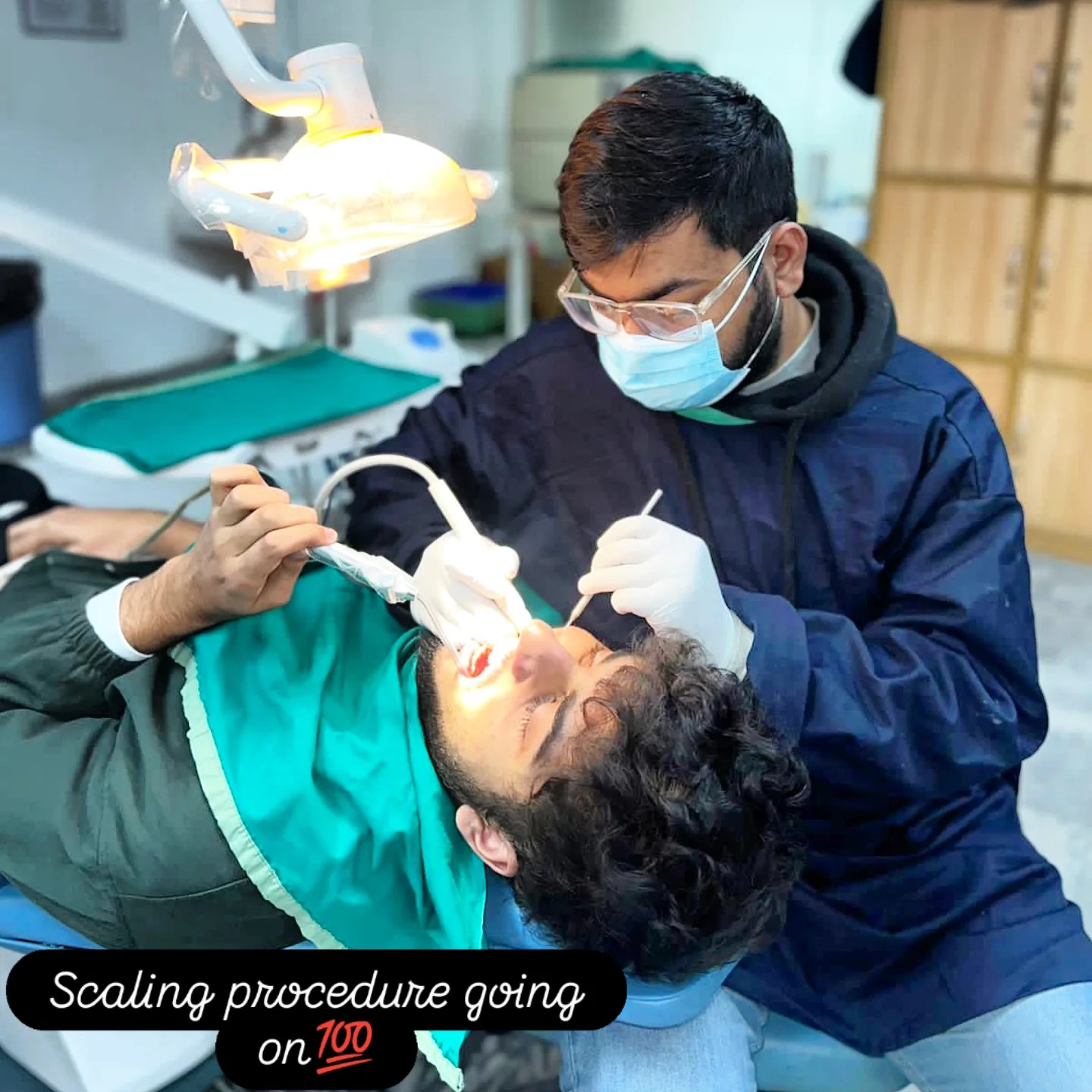
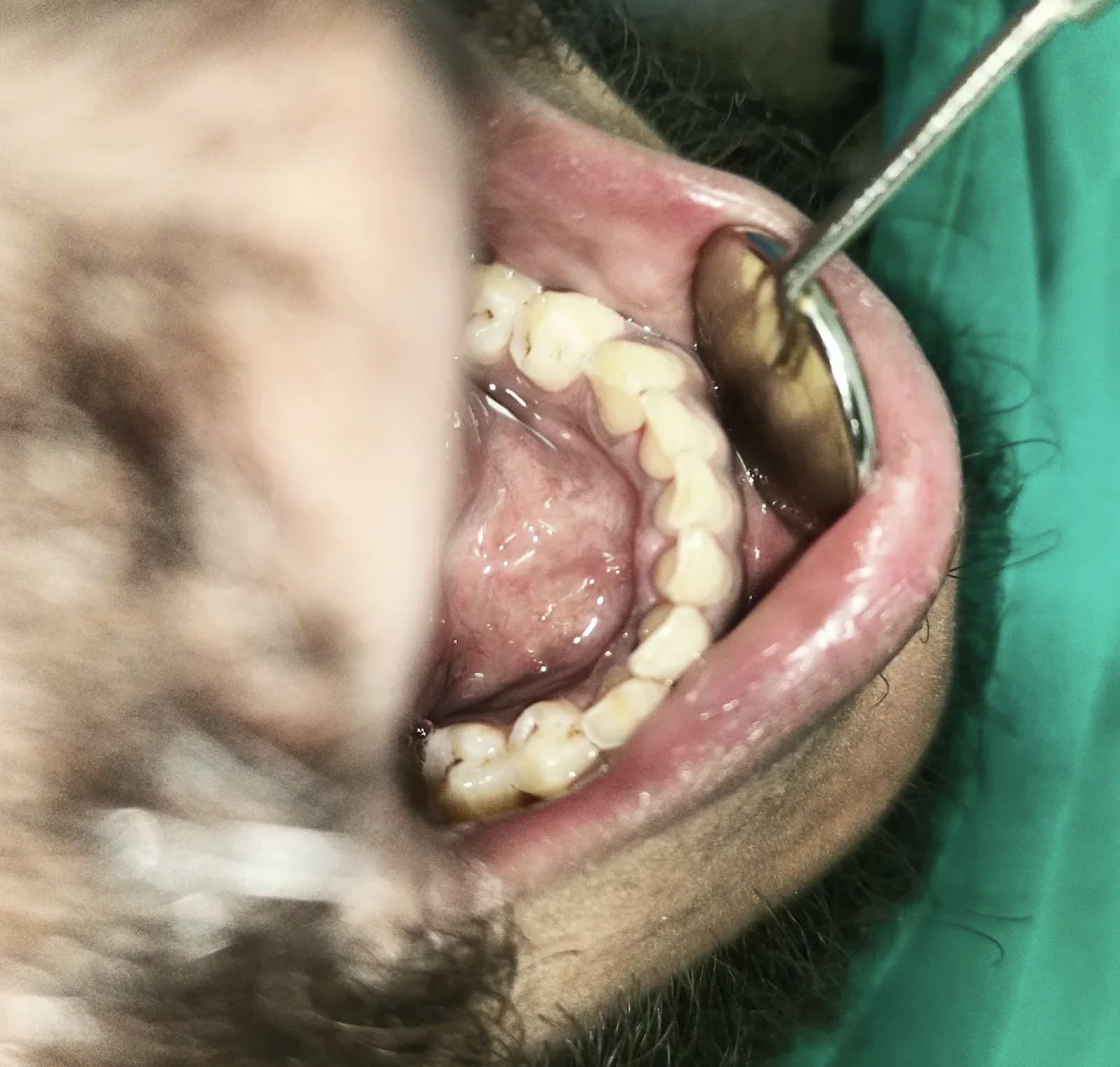
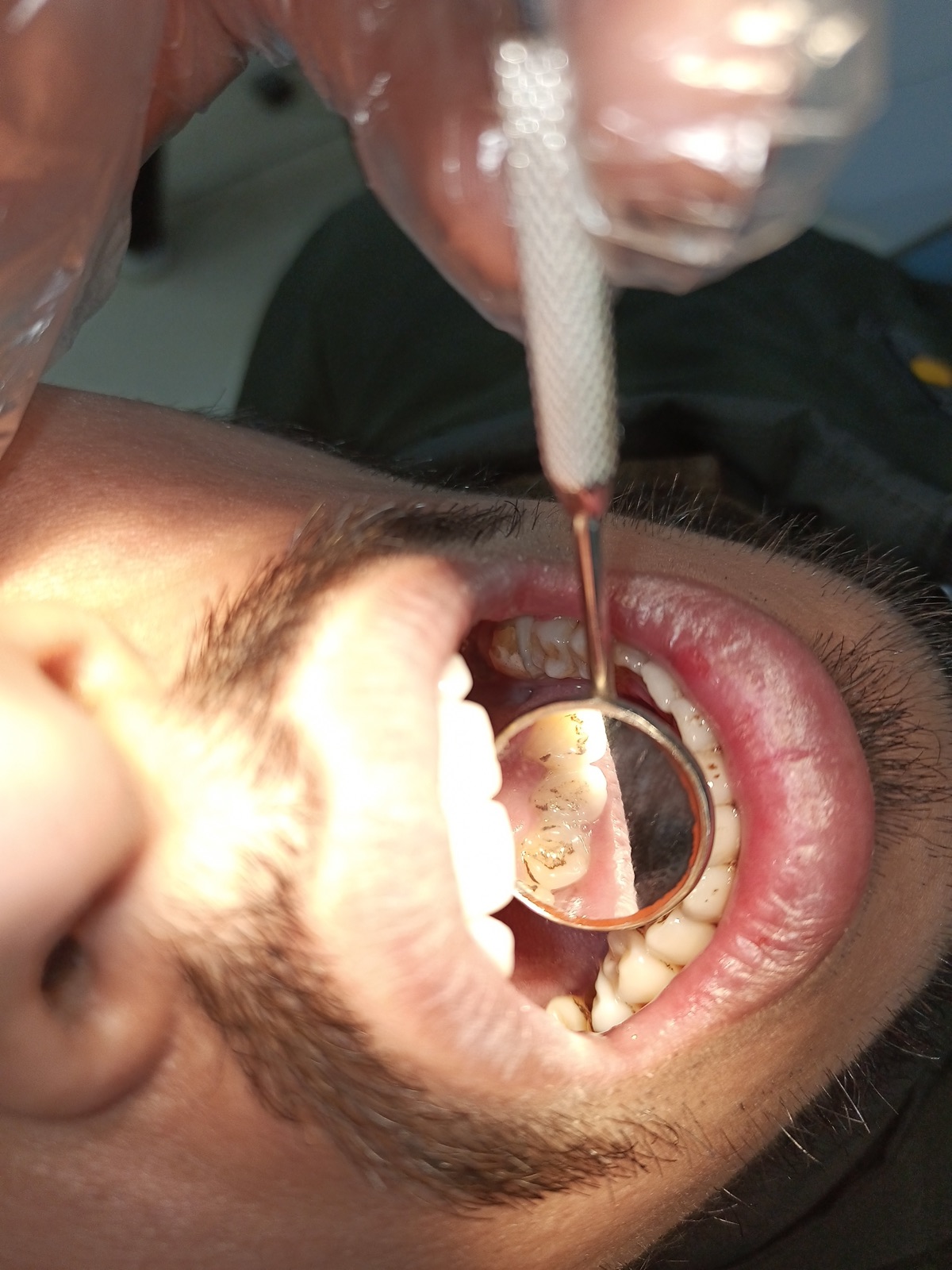
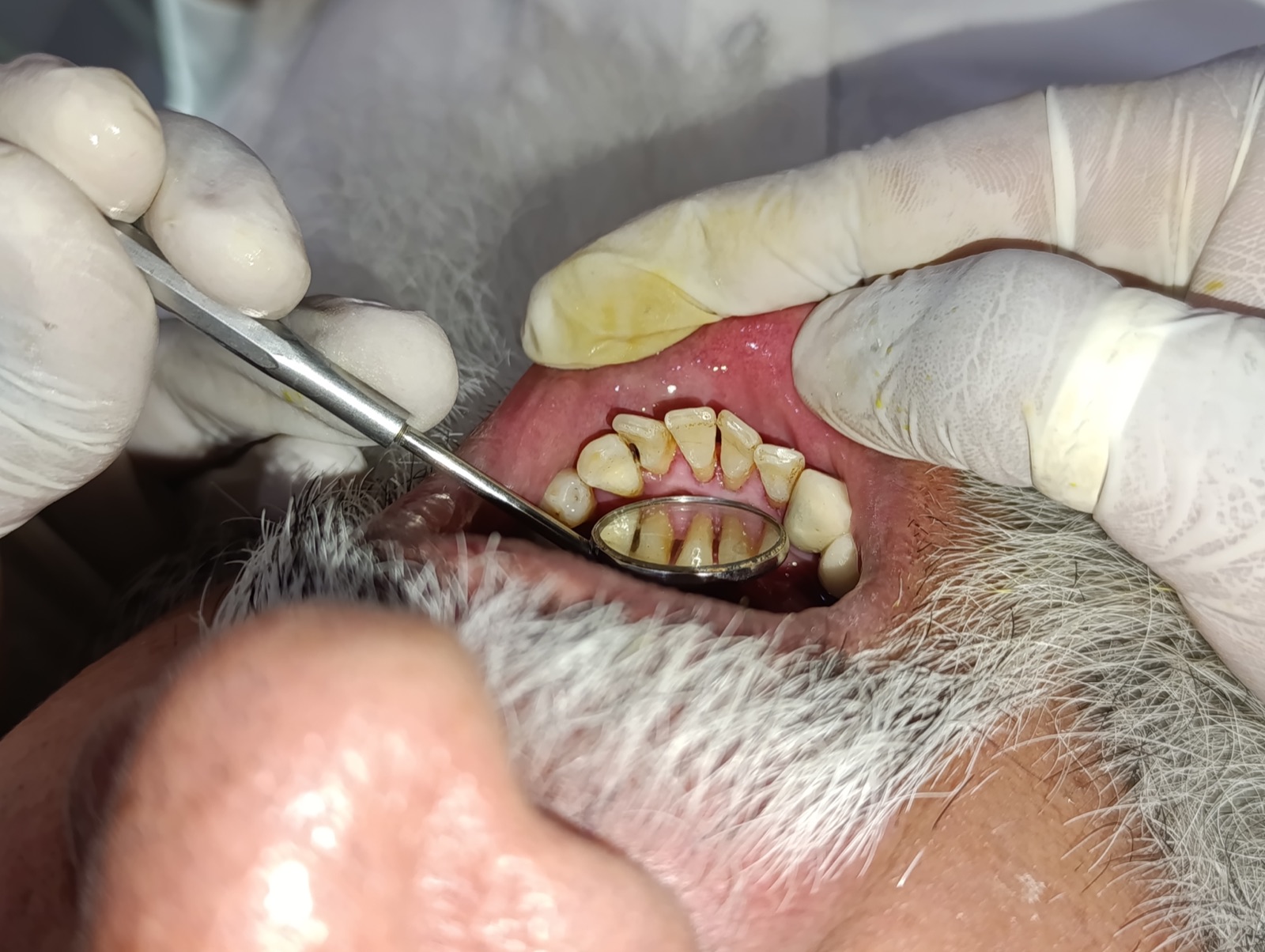
Long-form case studies from our patient archive — many of them show how routine scaling and checkups catch decay before it ever becomes a root canal. Every photo was taken in our Engineers Town clinic with patient consent.
Four ways to pay for your root canal.
We don't want cost to be the reason a tooth is lost to extraction. The four payment paths below cover almost every patient's situation — discussed openly at the consultation, no pressure, no awkwardness.
Treatments, problems, and terminology.
Related treatments
What it relates to
Save the tooth. Painlessly.
Book a free 15-minute consultation. We'll examine the tooth, take an X-ray if needed, recommend single-visit or multi-visit, hand you a written quote — and you decide from there. Painless modern RCT is the rule, not the exception, and there is no pressure to book the same day.