😣
Chronic Stress
The most common single trigger — high cortisol drives night-time muscle activity.
Grinding wears enamel quietly. By the time the teeth feel sensitive or short, years of damage have usually happened. At Odonto, bruxism is diagnosed clinically and protected with a custom night guard fitted exactly to your bite.
Quiet But Destructive
Grinding happens in sleep, so damage shows years after it starts.
Stress Is A Trigger
Cortisol drives night-time muscle activity in most adult cases.
Custom Guards Win
Shop-bought guards rarely fit, and loose guards can make clenching worse.
TMJ Check Every Time
Long-term grinding is the leading dental cause of TMJ disorder.
Bruxism is rarely a single-cause problem. It is usually a combination of psychological stress, sleep disturbance, an uneven bite, and occasionally medication side effects. Treatment starts with identifying which factors apply to you.
The most common single trigger — high cortisol drives night-time muscle activity.
Sleep apnoea and disrupted REM cycles are strongly associated with bruxism.
High restorations or malocclusion can keep the habit running night after night.
Evening coffee, nicotine, and certain medications raise muscle activity during sleep.
Some antidepressants and ADHD medications list bruxism as a known side effect.
Bruxism clusters in families and often starts in childhood before returning in adulthood.
Pakistan-Specific Patterns
Because most grinding happens during sleep, it is usually a partner, a family member, or a dentist who notices first. A full detailed clinical examination is the most reliable way to confirm the diagnosis and assess how much damage has already occurred.
| Area | Early Warning Sign | Long-Term Consequence |
|---|---|---|
| Front teeth | Slightly flat edges | Shortened, chipped, or translucent teeth |
| Jaw muscles | Morning soreness | Masseter hypertrophy and constant ache |
| TMJ | Occasional clicking | Chronic pain and restricted opening |
| Sensitivity | To cold air or water | Exposed dentine requiring crowns |
| Sleep | Partner hears grinding | Disturbed sleep and sleep apnoea link |
| Restorations | Minor chipping | Fractured crowns and lost fillings |
Before a night guard is made, Dr. Mian Momin Ahmad assesses the wear pattern, the TMJ, and any contributing bite issue that might keep the habit going.
Sleep patterns, stress, caffeine intake, and medications all recorded.
Flat facets on canines and incisors are mapped photographically.
Jaw joint is palpated and listened to for clicks, pops, and limited opening.
Masseter and temporalis tenderness is checked and graded.
High spots and interferences are identified on articulating paper.
Digital or conventional impressions taken for a perfectly fitted splint.
A hard acrylic splint fitted exactly to your upper or lower teeth — worn during sleep to absorb the grinding force.
Selective reshaping of high spots on teeth to balance the bite and reduce the stimulus to clench.
Worn or fractured teeth are rebuilt with composite, onlays, or crowns once grinding is under control.
Long-term grinding loads the jaw joint and is one of the main causes of TMJ disorder. If you have clicking, locking, or morning jaw pain, the TMJ pain evaluation page explains the full assessment and treatment pathway.
Occasional grinding, no sensitivity, no visible wear.
Stress Advice + Review
Regular grinding, flat front edges, morning stiffness.
Custom Night Guard
Visible tooth wear, sensitivity, frequent headaches.
Night Guard + Bite Check
Cracked or fractured teeth, TMJ pain, locked jaw.
Full Rehabilitation
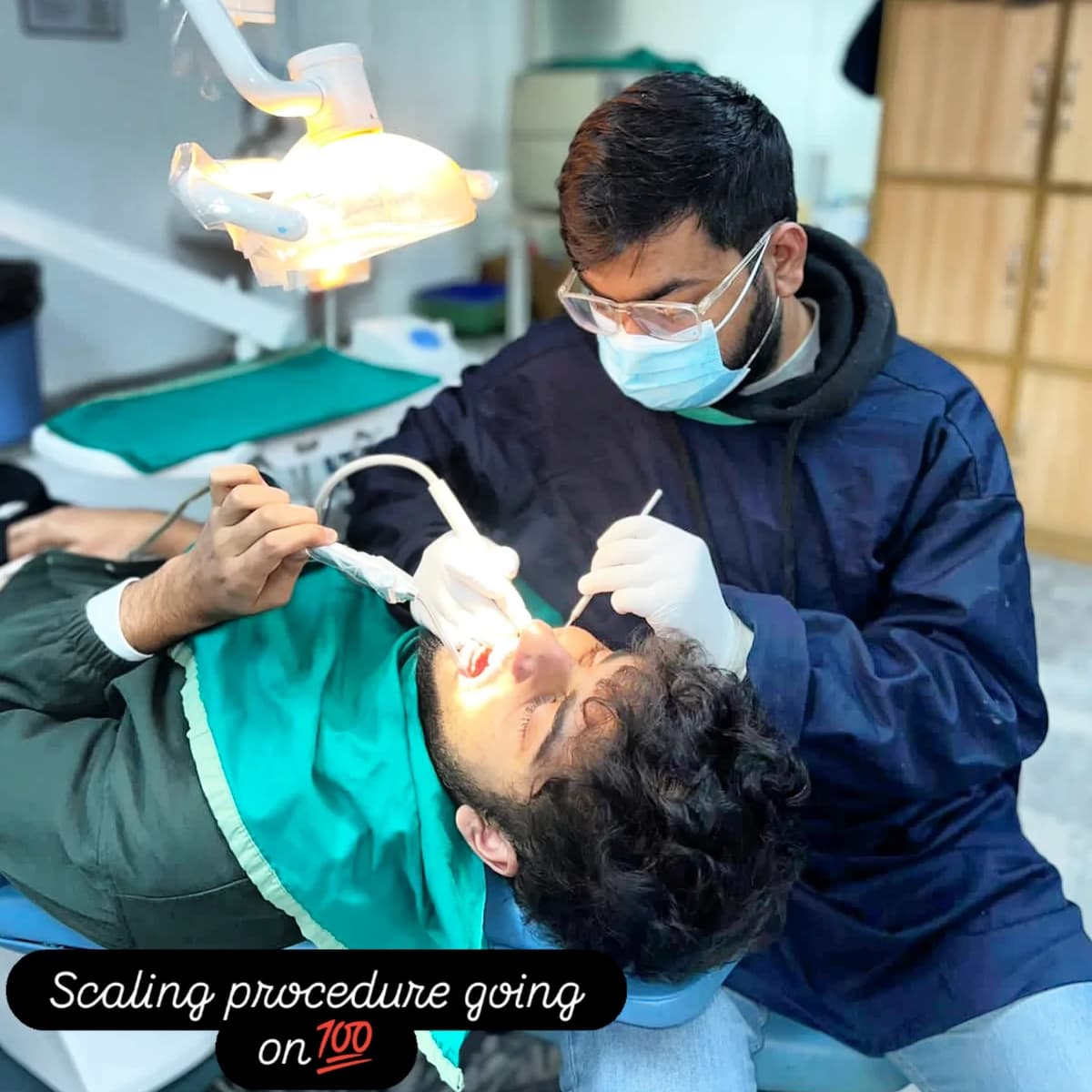
With over 10 years of clinical experience in restorative, cosmetic, and preventive dentistry, Dr. Mian Momin Ahmad is dedicated to delivering exceptional dental care with a gentle touch.
Book AppointmentQualifications & Certifications
Clinic Location
Plot #7, Shop #2, Main Defence Rd, Block A1 Engineers Town, Lahore, Pakistan
 BeforeAfter
Night grinder — 3 years
Wear stopped, headaches resolved
.jpeg&w=3840&q=75) Before
Before After
AfterFlat worn front teeth
Height and shape restored
BeforeAfterFractured molar
Molar saved, bite balanced
BeforeAfterGrinding + TMJ pain
Pain-free, sleep improved
The most common clues are waking with jaw soreness, temple headaches, or flat front teeth. Partners often hear the grinding sound. A clinical exam confirms the wear pattern.
A night guard does not stop the habit itself, but it absorbs the force so the teeth, jaw joints, and muscles stay protected. This is the single most effective protective step in dentistry for bruxism.
Soft guards are cheaper and used for mild cases. Hard acrylic guards are more durable, more precise, and are the gold standard for moderate and severe grinders.
OTC boil-and-bite guards offer basic protection but do not fit accurately and can even worsen the bite. A custom-made guard lasts much longer and provides true clinical protection.
Stress management, caffeine reduction, and jaw-relaxation exercises all help. But while the habit is active, a night guard is still needed to protect the teeth.
Yes. Tension in the masseter and temporalis muscles refers pain to the temples and is a very common cause of morning headaches that are often misdiagnosed as migraine.
Pricing depends on material (soft vs hard) and whether occlusal adjustment is included. Odonto provides a written quote at the free first consultation.
Yes — paediatric bruxism is common and usually outgrown. Protective measures are only considered if tooth wear is visible or the child has jaw pain.
A properly fitted night guard is the single most cost-effective dental investment for a grinder. Book your free consultation today.
Geographic Coverage
Odonto Dental Clinic is centrally located on Main Defence Road in Engineers Town, Lahore. Our location offers swift, direct road access to key residential communities, making premium dental treatments highly accessible for families in southern Lahore.